Augmented Reality in Everyday Mobile Apps by 2026
29 April 2026
You know that moment when you’re trying to assemble IKEA furniture, and the instructions look like they were drawn by a toddler with a crayon? Or when you’re shopping for a new couch online, and you’re not sure if it’ll fit in your living room without turning the space into a Tetris nightmare? Well, by 2026, augmented reality (AR) is set to rescue us from these daily frustrations—and it’s not just for tech nerds or gamers anymore. We’re talking about AR slipping into the apps you already use, like a quiet superhero who doesn’t need a cape. Let’s dive into how this technology is about to become as normal as swiping right or checking the weather.
Why 2026? The Perfect Storm for AR
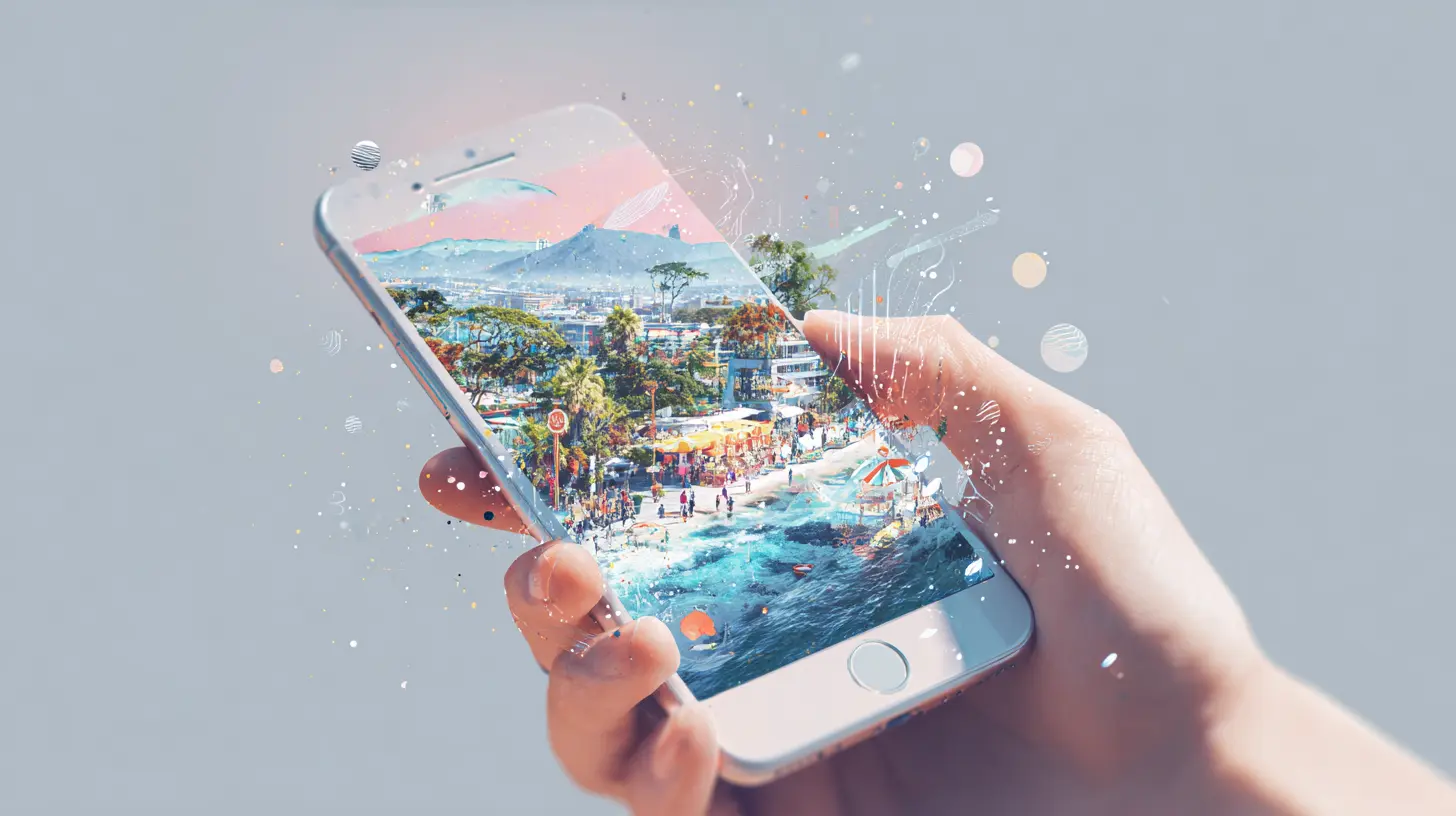
First, let’s address the elephant in the room: Why is 2026 the magic year? It’s not like someone drew a line in the sand and said, “AR goes mainstream here.” Instead, it’s a convergence of three forces: hardware getting cheaper, 5G becoming the norm, and app developers finally getting their act together. Think of it like baking a cake—you need the right ingredients at the right time. By 2026, the smartphone in your pocket will have the processing power of a small laptop from five years ago. Add in 5G’s low latency (meaning no lag when you point your camera at a park bench), and suddenly AR feels less like a gimmick and more like a utility.But here’s the kicker: People aren’t going to download a separate “AR app.” That’s like asking someone to install a special browser just to read emails. Instead, AR will be baked into apps you already love—Instagram, Amazon, Google Maps, and even your banking app. By 2026, you won’t even think about “using AR.” You’ll just point your phone at a menu to see calorie counts or hold it up to a street sign to get historical facts. It’ll be as seamless as breathing. Or at least as seamless as scrolling through TikTok.
The Shopping Revolution: Try Before You Buy (Literally)
Let’s start with the most obvious use case: shopping. I don’t know about you, but I’ve bought a “midnight blue” sweater online only to realize it’s actually “depressing navy” when it arrives. AR is about to kill that disappointment. By 2026, major retailers like Amazon, IKEA, and Sephora will have AR so refined that you can “try on” clothes, see how a sofa looks in your room, or test lipstick shades without smearing anything on your wrist.Imagine this: You’re scrolling through an app like Zara, and instead of guessing if those jeans fit, you tap a button. Your phone’s camera activates, and a digital overlay of the jeans appears on your legs in real-time. It adjusts as you move, accounting for lighting and fabric wrinkles. Sound like science fiction? It’s already happening in beta forms, but by 2026, the accuracy will be creepy-good. Retailers love this because it slashes return rates (which cost them billions annually). You love it because you stop looking like a fashion disaster. Win-win.
But here’s where it gets wild: AR won’t just show you products; it’ll show you context. Point your phone at your empty bookshelf, and an app like Wayfair will recommend vases, plants, or books that fit the exact dimensions. It’ll even suggest color palettes based on your room’s lighting. By 2026, shopping will feel less like a chore and more like a game of “what looks good here?” And yes, your wallet will cry, but your Instagram feed will thank you.
Navigation Gets a Facelift: No More “You Are Here” Stick Figures
Let’s be honest: Google Maps has saved our lives more times than we admit. But staring at a blue dot on a 2D map while walking through a crowded city? That’s like trying to read a book while riding a rollercoaster. By 2026, AR will turn navigation into something straight out of a sci-fi movie.Picture this: You’re in Tokyo (or your local downtown), and you need to find a ramen shop. Instead of glancing down at your phone every two seconds, you hold it up. Arrows, street names, and distances appear overlaid on the real world. A glowing path shows you exactly where to walk, and if you’re near the destination, a digital sign pops up saying, “You’re here—eat the tonkotsu.” This isn’t a pipe dream; Google already has AR navigation in beta for a few cities. By 2026, it’ll be standard in every mapping app, from Apple Maps to Waze.
But it goes deeper. Imagine hiking trails where AR markers point out wildlife or historical landmarks. Or airports where floating signs guide you to gate B12 without the panic of missing your flight. The beauty here is that AR removes the cognitive load of translating a map into real-world actions. It’s like having a personal guide who never gets annoyed, never takes a coffee break, and always knows the shortcut.
Social Media: Filters on Steroids (and Actually Useful)
Okay, I know what you’re thinking: “AR filters are already everywhere on Instagram and Snapchat.” And you’re right. But by 2026, those filters will evolve from “cute dog ears” to tools that actually improve your life. Think of it as the difference between a toy and a Swiss Army knife.For example, imagine pointing your camera at a friend’s outfit. A subtle AR overlay shows you where she bought the jacket, the price, and even similar items in your size. Or you’re at a concert, and you hold up your phone to see the song lyrics floating above the stage. Social media apps will also integrate AR for real-time translation: You’re at a café in Paris, and the menu text is replaced with English as you hover your phone over it. No more awkwardly pointing at random items and hoping it’s not snails.
But here’s the social twist: AR will make interactions more immersive. Instead of sending a boring “Happy Birthday” text, you’ll send a 3D hologram of a cake that your friend can “place” on their kitchen table via their phone. By 2026, AR in social apps won’t just be about selfies; it’ll be about sharing experiences. You’ll “leave” a digital note on a park bench for a friend to find later, or you’ll “paint” a virtual mural on a wall that only appears when someone scans it with their app. It’s like Pokémon Go, but for everyday life.
Education and Training: Learning Without the Boredom
Let’s be real: Reading a textbook is about as exciting as watching paint dry. But AR is about to turn learning into an interactive playground. By 2026, educational apps will use AR to bring concepts to life. Imagine a biology app where you point your phone at a plant, and a 3D model of its cellular structure hovers above it. Or a history app that lets you “walk through” the Colosseum in ancient Rome just by scanning your living room floor.For professionals, AR will become a training tool. Mechanics will point their phone at a car engine and see step-by-step repair instructions overlaid on the parts. Surgeons will practice complex procedures on virtual patients before touching a real scalpel. Even your kid’s homework will get a boost: Instead of solving a math problem on paper, they’ll “build” 3D shapes with their phone, watching geometry come alive. The key here is that AR makes abstract concepts tangible. You don’t just read about gravity; you see a virtual apple falling in your room. That’s the kind of learning that sticks.
Healthcare: Your Doctor in Your Pocket
By 2026, AR will quietly revolutionize how we manage our health. No, it won’t replace your doctor, but it’ll make you less reliant on Dr. Google (thank goodness). Imagine an app like WebMD that uses your camera to analyze a rash or a mole. The app overlays information about symptoms, suggests whether you should see a specialist, and even tracks changes over time. It’s like having a dermatologist in your pocket, minus the awkward small talk.For chronic conditions, AR will be a game-changer. Diabetics will point their phone at a meal and see real-time sugar content. People with asthma will scan their environment to detect pollen or pollution levels. And fitness apps? They’ll go beyond counting steps. Imagine a workout app that uses AR to show you proper form for a squat—a virtual skeleton aligns with your body, showing you exactly where to bend. By 2026, AR won’t just track your health; it’ll coach you through it.
The Privacy Elephant: Is AR Spying on Us?
Now, let’s address the uncomfortable truth: AR requires cameras, data, and constant scanning. That’s a privacy nightmare waiting to happen. By 2026, we’ll have to grapple with questions like: Does your shopping app need to know your living room layout? Should a social media app be able to recognize your face in a crowd? The answer is complicated.On one hand, AR apps will become more transparent about data usage. You’ll see pop-ups like “This app needs camera access to show you virtual furniture—data is not stored.” On the other hand, there’s a risk of companies using AR to build detailed profiles of your home, your habits, and even your emotions (yes, some apps can detect your mood from facial expressions). By 2026, expect stricter regulations, similar to Europe’s GDPR, that force companies to ask for permission at every step. But the burden also falls on us: We’ll need to be smarter about which apps we trust. Think of it like inviting a stranger into your home—you wouldn’t let just anyone in, so why let any app scan your bedroom?
The Tech Behind the Magic: How AR Actually Works in 2026
You don’t need to be a coder to appreciate this, but let’s demystify the magic. By 2026, AR won’t rely on heavy cloud processing (which causes lag). Instead, your phone’s chip—like the Snapdragon 8 Gen 4 or Apple’s A19 Bionic—will handle everything locally. It uses something called “simultaneous localization and mapping” (SLAM) to understand your environment. Basically, your phone scans the room, creates a 3D map, and then places digital objects on that map in real-time. It’s like giving your phone a pair of eyes that can see both the real and virtual worlds.The other breakthrough is “occlusion”—the ability for virtual objects to hide behind real ones. If you place a digital vase on your table, it should disappear when you walk in front of it. By 2026, occlusion will be nearly perfect, thanks to depth-sensing cameras (like LiDAR) that are standard on most phones. This is why AR will feel less like a floating sticker and more like a genuine part of your environment. The technology won’t be perfect, but it’ll be good enough to fool your brain 90% of the time.
The Bumpy Road Ahead: What Could Go Wrong?
Let’s not sugarcoat it: AR in 2026 won’t be all rainbows and virtual unicorns. There will be hiccups. Battery life is the obvious culprit—running AR for 10 minutes can drain your phone faster than a 4K video. By 2026, we’ll see better battery tech (maybe graphene or solid-state batteries), but early adopters will still carry power banks like they’re lifelines.Then there’s the “creep factor.” Imagine walking down the street and seeing ads overlaid on buildings, or someone’s AR spam covering your favorite café’s facade. By 2026, we’ll need digital etiquette—like “do not AR” zones—to prevent visual pollution. Also, accessibility is a concern: AR relies heavily on sight, so developers will need to integrate audio and haptic feedback for visually impaired users. If 2026’s AR is only for the able-bodied, it’s a failure.
A Glimpse Into Your Day in 2026
Let’s paint a picture. You wake up and grab your phone. Instead of a boring alarm, you see a virtual sunrise projected on your ceiling (courtesy of your sleep app). You point your camera at the fridge: an AR overlay shows the calories in that leftover pizza, and a recipe app suggests turning it into a healthy omelet. On your commute, you hold up your phone at a bus stop: a floating sign tells you the next bus arrives in 3 minutes and shows real-time seat availability.At work, you use an AR collaboration app to “place” a 3D model of a product on your desk, rotating it with your fingers while colleagues from other countries see it on their end. After work, you meet a friend at a new restaurant. Instead of a menu, you scan the table with your phone, and each dish shows a preview—complete with glowing reviews from past diners. You pay with a wave of your phone, and your banking app shows a receipt floating in the air. It’s not magic; it’s just 2026.
Conclusion: The Future Is Already Here, Just Unevenly Distributed
By 2026, AR in everyday mobile apps won’t be a novelty; it’ll be a utility, like Wi-Fi or GPS. It’ll save us time, reduce mistakes, and make the boring parts of life a little more interesting. But it’ll also raise questions about privacy, digital clutter, and our reliance on screens. The key is balance—using AR as a tool, not a crutch.So, the next time you struggle to parallel park or squint at a restaurant menu, remember: Help is coming. And it’s riding on the back of your smartphone camera. Are you ready to see the world through a new lens?
all images in this post were generated using AI tools
Category:
Mobile ApplicationsAuthor:

Pierre McCord
Discussion
rate this article
1 comments
Journey McCartney
By 2026, AR's true value won't be spectacle but subtle utility—seamlessly overlaying navigation, product dimensions, or real-time language translation. The magic is when the digital fades into the mundane.
April 30, 2026 at 4:07 AM
Pierre McCord
Exactly. The real promise of AR lies in blending the digital with daily life, making it effortlessly useful rather than just flashy.