Data Security in SaaS: What You Need to Know for 2026
2 May 2026
Let's be honest. If you run a business today, you are probably renting your software. You don't own it. You log in, pay a monthly bill, and hope the servers stay up. That is the SaaS world we live in. It is convenient, scalable, and frankly, it is the backbone of modern operations. But here is the thing nobody wants to talk about at happy hour: your data is sitting in someone else's house. And by 2026, that house is going to have a lot more windows.
We have all heard the horror stories. A major cloud provider goes down for a day, and suddenly a whole industry can't send invoices. A misconfigured S3 bucket leaks millions of customer records. A phishing attack on a vendor's Slack channel gives hackers the keys to the kingdom. These aren't edge cases anymore. They are the cost of doing business in the cloud.
So, how do you sleep at night knowing your customer database is living on a server you have never touched? You need a plan. Not just a firewall and a password. A real, living, breathing strategy for 2026.
The Shifting Threat Landscape: Why 2026 Is Different
You might be thinking, "We have antivirus. We have MFA. We are fine." I hate to break it to you, but that is like locking your front door but leaving the garage door open with a note saying "keys under the mat." The threats for 2026 are not just about brute force attacks. They are about trust erosion.First, we have the rise of AI-generated attacks. Hackers are not sitting in a dark room typing code anymore. They are using AI to write perfect, grammatically correct phishing emails that sound exactly like your CEO. They are using deepfake voice calls to trick your finance team into wiring money. The old "check for spelling mistakes" rule is dead. By 2026, these attacks will be so seamless that the only defense is a culture of paranoia and verification.
Second, the supply chain is the weakest link. You don't just use one SaaS tool. You use a CRM, a project management tool, a communication platform, a billing system, and a data analytics suite. They all talk to each other. If a small, obscure plugin in your marketing automation tool gets compromised, that hacker now has a backdoor into your entire customer list. Your security is only as strong as the least secure vendor you have connected to.
Third, data residency is becoming a geopolitical nightmare. Governments are drawing digital borders. If you have customers in Europe, the US, and Asia, you cannot just dump everything in a single data center in Virginia anymore. By 2026, you will need to know exactly where every byte lives, how it moves, and which local laws apply to it. Ignoring this is not just a security risk; it is a legal liability that can shut you down.
Shared Responsibility: The Big Lie Nobody Tells You
Here is the most common misconception in SaaS security. People think, "Well, I pay Salesforce or Slack or Notion, so they must be securing my data, right?" Wrong. That is like saying, "I pay the bank to hold my money, so they must be responsible if I write my PIN on the deposit slip."The cloud providers follow a model called "Shared Responsibility." They are responsible for the security of the cloud. That means they patch their servers, protect their physical data centers, and keep the network running. You are responsible for security in the cloud. That means your passwords, your user permissions, your integrations, and your data classification.
Let me paint a picture. In 2026, the line between "their fault" and "your fault" will be razor thin. If you give admin access to a junior employee who clicks a malicious link, that is on you. If you connect a third-party AI tool to your database without reviewing its privacy policy, and it scrapes all your data to train its model, that is on you. The vendor provides the fence. You have to lock the gate.
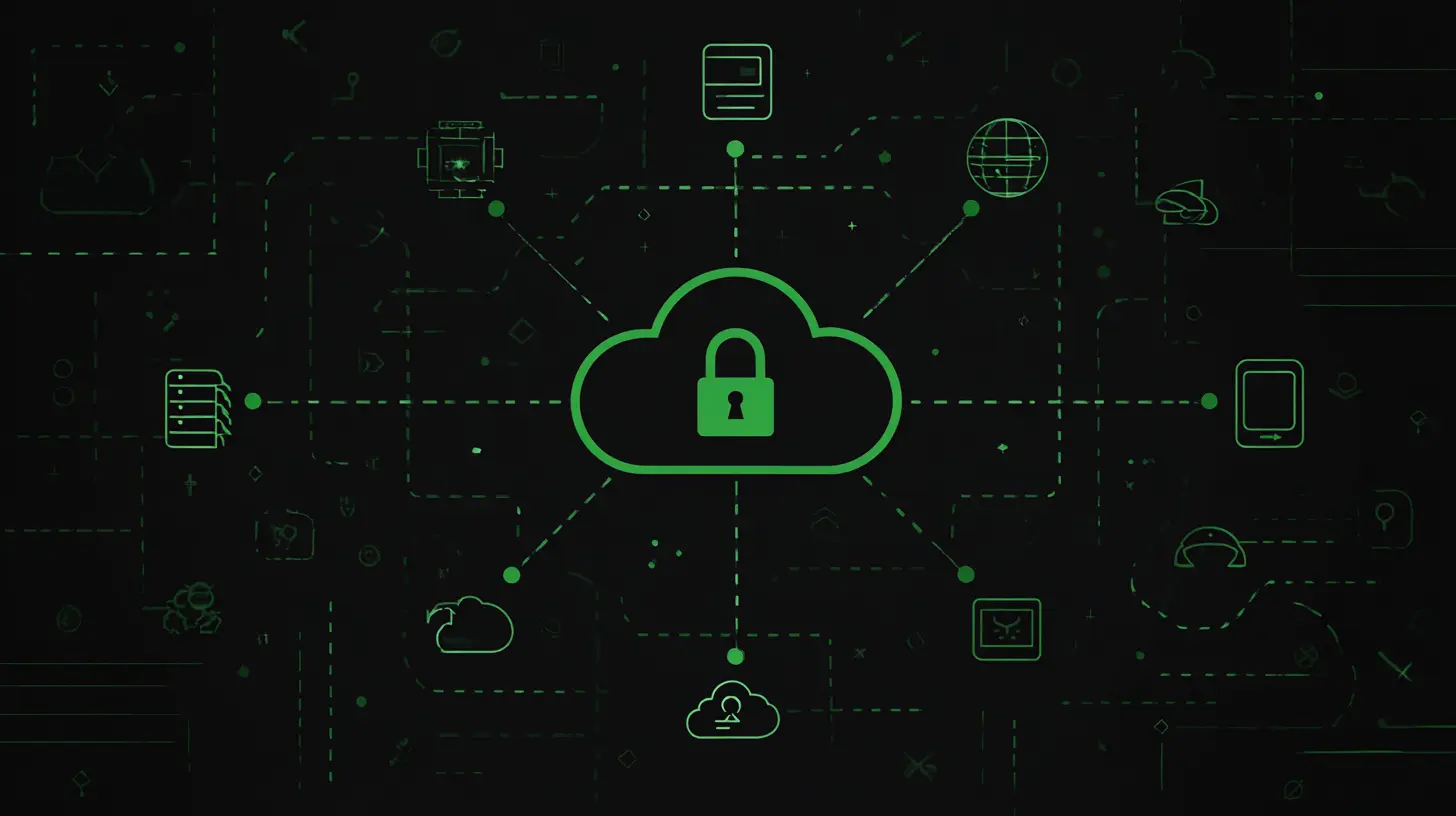
The Zero Trust Mindset: Assume You Are Already Breached
The most effective strategy for 2026 is not a better firewall. It is a change in philosophy called Zero Trust. The old model was "trust but verify." The new model is "never trust, always verify."Think of it like a nightclub. In the old days, you showed a valid ID at the door, and then you could walk anywhere. You could go into the VIP room, the back office, or the DJ booth. That is a perimeter-based security model. It fails if one ID is fake.
Zero Trust is different. You show your ID at the door, but that only gets you into the lobby. To go to the bathroom, you need another key card. To order a drink, you need a separate token. To enter the office, you need biometrics. Every action is verified, every time. It is annoying. It is slow. But it stops a breach from spreading.
For your SaaS stack in 2026, this means:
- Micro-segmentation: Do not give users access to everything. Give them the minimum they need to do their job and nothing else. A sales rep does not need to see the payroll data.
- Continuous verification: Do not just check the password once. Check the device health, the location, the time of day, and the behavior pattern. If a user logs in from New York at 9 AM and then tries to access the system from Nigeria at 9:10 AM, block it.
- Least privilege: This is the golden rule. Every integration, every API key, every service account should have the absolute minimum permissions required. If an integration breaks because it cannot read the whole database, that is a feature, not a bug.
Encryption: The Last Line of Defense
Let's talk about encryption. It is not magic. It is math. But it is the only thing that protects you when everything else fails.You need to understand the difference between encryption at rest and encryption in transit. Data in transit is moving between your laptop and the server. This is usually protected by HTTPS. Good. But what about data at rest? That is the data sitting on the hard drive of the SaaS provider.
Most big providers encrypt data at rest. But here is the critical question for 2026: who holds the keys?
If the SaaS provider holds the encryption keys, they can read your data. They might not want to, but they can. If a government subpoenas them, they can hand over your data. If a hacker breaches their key management system, they can decrypt everything.
The gold standard for 2026 is Customer-Managed Encryption Keys (CMEK) or Bring Your Own Key (BYOK) . This means you generate the encryption key, you store it in your own secure vault (like AWS KMS or Azure Key Vault), and you give the SaaS provider access to use it. If you revoke that access, the data becomes unreadable. It puts you in control. It is harder to set up. It costs more. But it is the only way to truly own your data in a rented world.
The Human Factor: Your Weakest Link Is Not a Bug
We can talk about firewalls, encryption, and Zero Trust all day. But the biggest vulnerability in any SaaS system is the person typing on the keyboard.Social engineering is getting scary good. In 2026, a hacker will not need to break your code. They will call your help desk, pretend to be a new employee who lost their phone, and ask for a password reset. They will send a fake invoice to your accounting team with a link that looks exactly like your billing portal.
You need to train your people to be paranoid. Run phishing simulations. Make them question every request for data. Create a process for "out-of-band" verification. If someone emails you asking for a wire transfer, call them on the phone. If they text you, confirm it in person. Build a culture where it is okay to say "no" or "let me verify that first."
Do not underestimate the power of a simple, stupid mistake. A shared password on a sticky note. An admin account with no MFA. A public GitHub repo with an API key. These are the things that sink ships. By 2026, the companies that survive a breach will be the ones whose employees did not open the door for the wolf.
Vendor Vetting: How to Pick a Safe Partner
You cannot secure a SaaS tool you do not understand. Before you sign a contract in 2026, you need to do real due diligence. Do not just read the marketing page. Ask hard questions.First, ask for their SOC 2 Type II report. This is an independent audit of their security controls. If they do not have one, or if they refuse to share it, walk away. It is the bare minimum.
Second, ask about their incident response plan. How fast do they notify customers of a breach? Do they have a dedicated security team? What is their track record? Remember the SolarWinds attack? That happened because a vendor was compromised, and the malware spread to all their customers. You need to know that your vendor is watching their own supply chain.
Third, look at their data deletion policy. When you cancel your subscription, what happens to your data? Do they delete it immediately? Do they keep backups for 90 days? Do they sell it? In 2026, data privacy laws are getting stricter. You need a clean exit. If you cannot get your data out in a usable format, you are locked in. That is a security risk in itself.
Practical Steps for Your 2026 Playbook
Alright, enough theory. Let's get tactical. Here is what you should do today to prepare for 2026.1. Conduct a SaaS Audit. Make a list of every single SaaS application your company uses. You will be surprised. Shadow IT is real. People sign up for tools with their work email without asking IT. Find them all. If you do not know it exists, you cannot secure it.
2. Enable Single Sign-On (SSO) Everywhere. Stop using individual passwords. Use SSO (like Okta, Azure AD, or Google Workspace). This centralizes access control. When someone leaves the company, you disable their SSO account, and they lose access to everything. No more orphaned accounts.
3. Implement a Data Loss Prevention (DLP) Policy. Know what your sensitive data looks like. Credit card numbers? Social security numbers? Health records? Use tools that scan for this data and block it from being shared outside the organization. If a sales rep tries to email a spreadsheet with customer PII to their personal Gmail, the system should stop it.
4. Backup Your SaaS Data. This is the one everyone forgets. Your SaaS provider has backups for their own disaster recovery. But if you accidentally delete a critical folder, or if a ransomware attack encrypts your data, the provider is not going to restore it for you. Use a third-party backup tool for your critical SaaS apps (like Salesforce, Office 365, or Notion). You are the only one who cares about your data.
5. Review Integrations Quarterly. Every API connection is a risk. Go through your integrations every three months. Remove any that you do not use. Update any that are using old, insecure authentication methods. If an integration has "read and write" access to your database, ask yourself if it really needs it.
The Future Is Not Scary, It Is Just Different
Look, I am not trying to scare you. The SaaS model is amazing. It allows small startups to use enterprise-grade tools. It allows teams to collaborate from anywhere. But it comes with a price. That price is vigilance.By 2026, data security will not be a checkbox. It will be a competitive advantage. Your customers will ask about your security posture. Your investors will audit your vendor list. Your employees will demand transparency.
The companies that thrive will be the ones that treat data security like a muscle, not a shield. You have to exercise it. You have to test it. You have to keep it flexible. You cannot just buy a firewall and call it a day.
So, take a look at your SaaS stack right now. Who has access to your data? What would happen if a vendor went down tomorrow? What would happen if a hacker got into your CRM? If you cannot answer those questions confidently, you have work to do. Start today. 2026 is closer than you think.
all images in this post were generated using AI tools
Category:
Saas ToolsAuthor:

Pierre McCord
Discussion
rate this article
1 comments
Nora Pope
As we approach 2026, prioritizing data security in SaaS is crucial for businesses. Implement strong encryption and regular audits to protect sensitive information and build customer trust effectively.
May 6, 2026 at 5:00 AM
Pierre McCord
Absolutely, prioritizing data security is essential. Strong encryption and regular audits will go a long way in safeguarding sensitive data and ensuring customer trust. Thanks for highlighting this!