How AI Is Transforming Virtual Meetings by 2026
26 April 2026
You know that feeling—the one where you’re staring at a grid of faces, half of them frozen mid-yawn, while someone drones on about quarterly projections. Virtual meetings, for all their convenience, have often felt like a necessary evil. But buckle up, because by 2026, AI is going to flip the script. We’re not talking about incremental tweaks like better noise cancellation or auto-generated captions. We’re talking about a fundamental reimagining of how we connect, collaborate, and even think in digital rooms. Imagine a meeting that anticipates your needs, reads the room better than a seasoned therapist, and saves you from the soul-crushing burden of taking notes. That’s the future we’re stepping into, and it’s closer than you think.
The Death of the "Mute Button" Era
Let’s be honest: the mute button has been the unsung hero of remote work. But it’s also a crutch. It silences the chaos, sure, but it also silences spontaneity. By 2026, AI will render the mute button almost obsolete—not by ignoring background noise, but by contextualizing it. Imagine an AI that can distinguish between a dog barking (irrelevant) and a colleague’s frustrated sigh (relevant). It will flag that sigh, nudge the meeting facilitator, and say, “Hey, Sarah seems disengaged. Maybe check in with her.” This isn’t sci-fi; it’s pattern recognition on steroids.Think of it like a smart thermostat for conversation. Instead of just keeping the temperature comfortable, AI adjusts the flow. If two people are talking over each other, the AI subtly adjusts audio delays or visually highlights who should speak next. It’s like having a traffic cop for dialogue, but one who never gets grumpy. By 2026, the mute button will be a relic, like a floppy disk or a landline. You won’t need to silence the world; the AI will curate it.

Real-Time Sentiment Analysis: The Meeting Whisperer
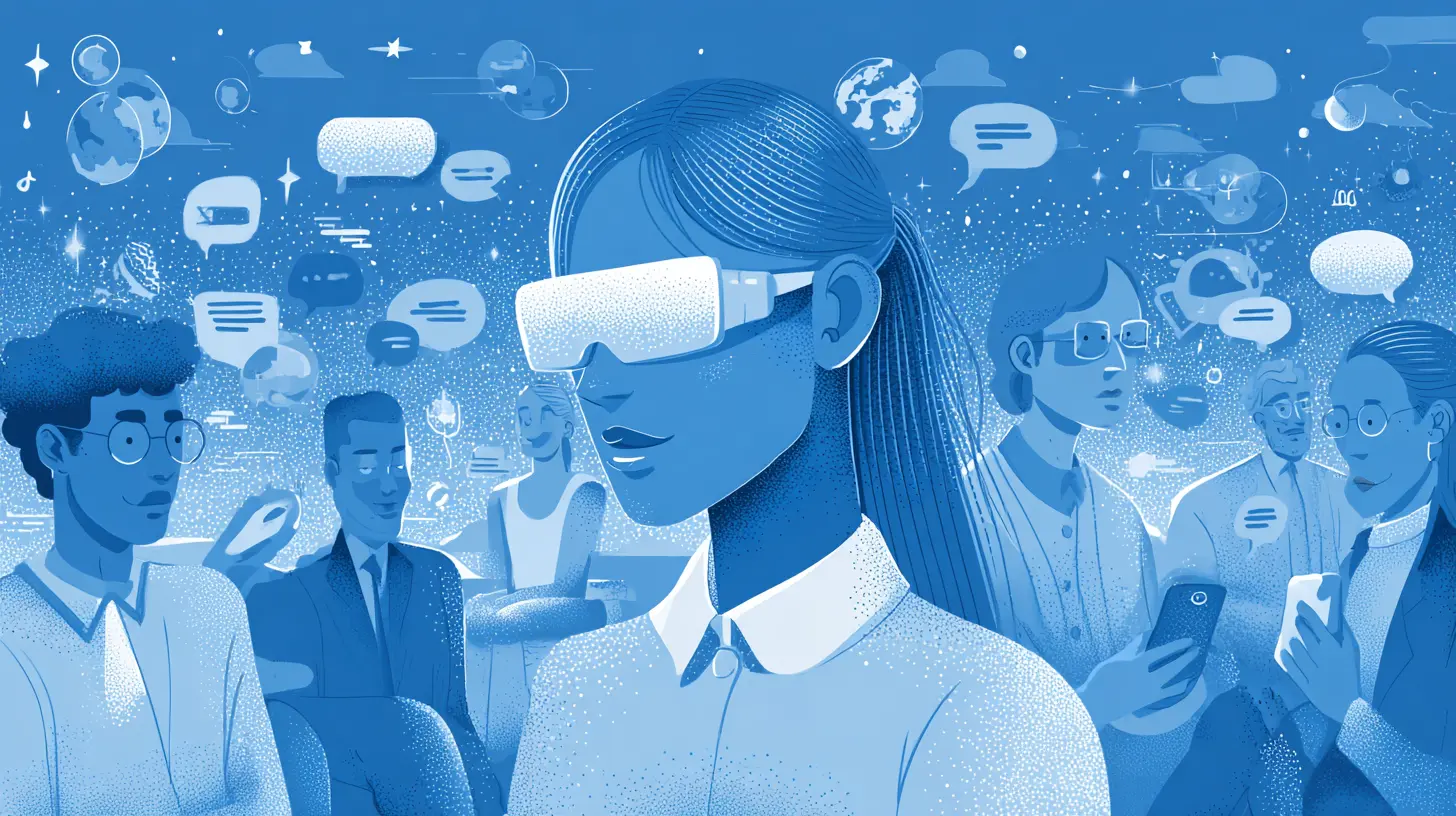
Have you ever been in a meeting where everyone says “yes” but their eyes scream “no”? That gap between words and intent is a breeding ground for miscommunication. AI by 2026 will bridge that gap with real-time sentiment analysis that’s scarily accurate. Using facial micro-expressions, tone of voice, and even typing speed (yes, even when someone is muted), AI will generate a live “emotional heatmap” of the room.Picture this: You’re presenting a new idea. A sidebar widget shows a green bar for “excitement,” a yellow one for “confusion,” and a red one for “resistance.” When confusion spikes, the AI pauses your presentation and suggests, “Maybe clarify the timeline?” It’s like having a co-pilot who reads the room so you don’t have to. And for introverts? This is a game-changer. No more guessing if your quiet nod was interpreted as agreement or apathy. The AI will give you a subtle prompt: “Your last comment was well-received. Want to expand on it?”
But here’s the rub: this level of analysis raises privacy questions. By 2026, expect to see ethical guardrails—opt-in features, anonymized data, and clear boundaries. The goal isn’t to spy; it’s to empathize. Because let’s face it, we’ve all wasted hours in meetings where nobody dared to say the obvious. AI will be the brave friend who finally says, “Guys, we’re stuck. Let’s pivot.”
Automated Summaries That Don’t Suck
Raise your hand if you’ve ever spent 20 minutes after a meeting trying to decipher your own notes. (I’m raising both hands.) Current AI transcription tools are decent, but they’re like a stenographer who writes down every “um” and “uh.” By 2026, AI will generate summaries that are better than what most humans can produce. It won’t just transcribe; it will synthesize.Imagine an AI that watches the entire meeting, then produces a one-page brief with three sections: Decisions, Action Items, and Unresolved Questions. It will assign tasks to specific people, set deadlines, and even draft follow-up emails. And here’s the kicker: it will learn your communication style. If you prefer bullet points over paragraphs, the AI adapts. If your boss likes a “TL;DR” upfront, it delivers. It’s like having a personal assistant who never sleeps, never complains, and never forgets.
But the real magic is in the why. The AI will highlight not just what was said, but what was implied. For example, if a team member said, “We could try the new approach,” but their tone suggested hesitation, the summary might note: “Skepticism around timeline feasibility.” This transforms a dry recap into a strategic document. You’ll walk out of a meeting not just remembering what happened, but understanding the emotional undercurrents. That’s the difference between a summary and a story.

The Rise of AI Meeting Facilitators
We’ve all had that one colleague who dominates the conversation, or the one who never gets a word in edgewise. By 2026, AI will act as a neutral facilitator, ensuring equitable participation. Think of it as a virtual roundtable moderator who uses data to balance the scales.Here’s how it works: The AI tracks speaking time, turn-taking, and even interrupt patterns. If one person has spoken 80% of the time, the AI will gently interject: “Let’s hear from someone who hasn’t spoken yet.” It might even suggest a “round-robin” format for the next agenda item. For remote teams spanning time zones, the AI will prioritize voices from underrepresented regions. No more 2 AM calls dominated by the New York office.
But this goes beyond fairness. The AI will also detect “decision fatigue” and suggest breaks. If a meeting runs past 45 minutes, it might say, “Attention levels are dropping. Let’s take a 5-minute stretch break.” It’s like having a coach who keeps you in the zone, not a boss who drives you into the ground. And for those marathon brainstorming sessions? The AI will use “divergent thinking” algorithms to suggest wildcard ideas, breaking the groupthink loop. Imagine a meeting where the AI says, “What if we tried the opposite of what we just discussed?” That’s not disruptive; it’s catalytic.
Personalized Meeting Avatars That Actually Represent You
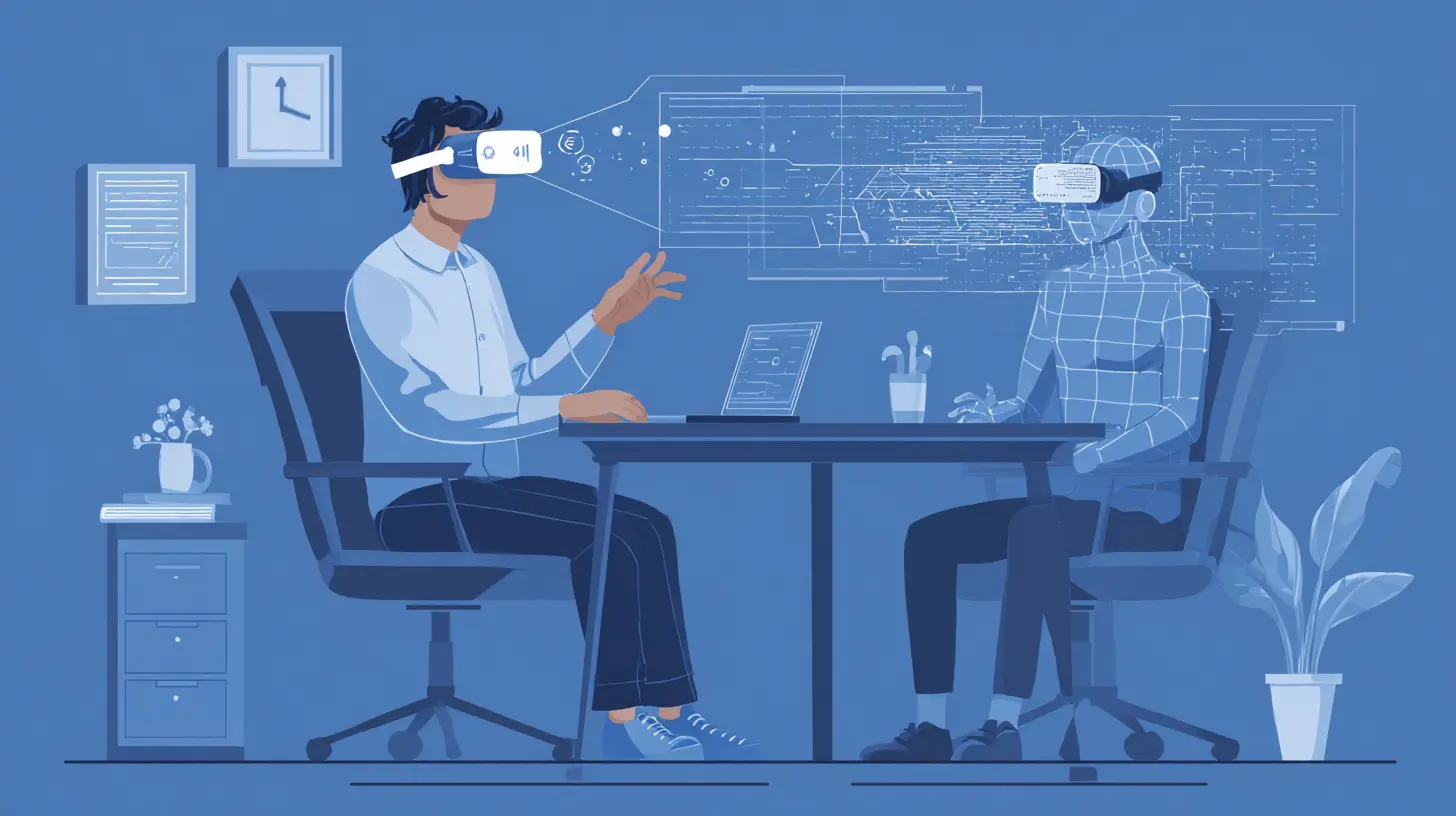
Let’s talk about the elephant in the Zoom room: camera fatigue. By 2026, AI-driven avatars will be indistinguishable from real humans—but with a twist. They won’t just mimic your appearance; they’ll mimic your presence. Imagine an avatar that blinks when you blink, leans forward when you’re interested, and even mirrors your hand gestures. It’s like a digital twin that attends the meeting while you sip coffee in your pajamas.But here’s where it gets wild: these avatars will learn your communication habits. If you tend to speak in short, punchy sentences, your avatar will adopt that style. If you’re more reflective, it will pause before responding. And for non-native speakers, the avatar can even adjust accent and vocabulary in real-time. No more worrying about mispronouncing “synergy” for the hundredth time.
The deeper implication is about authenticity. Will we lose the raw, unpolished human connection? Probably not. Instead, we’ll gain a layer of intentionality. You can choose when to be “present” with your real face and when to let your avatar carry the load. It’s like having a stunt double for boring status updates, freeing you up for the conversations that matter. By 2026, “attending” a meeting might mean sending your avatar, while you focus on deep work. And honestly? That might be the most liberating transformation of all.
Predictive Agendas: The Meeting That Plans Itself
One of the biggest time-wasters in virtual meetings is the “So, what’s the agenda?” question at the start. By 2026, AI will eliminate this entirely. Before a meeting even begins, the AI will analyze past conversations, project updates, and even Slack messages to generate a dynamic agenda. It will prioritize items based on urgency, assign pre-reading materials, and even estimate how long each topic will take.Think of it like a GPS for your meeting. You don’t just get a route; you get real-time traffic updates. If a discussion runs long, the AI will suggest, “We’re 10 minutes behind. Should we move Item 4 to a follow-up?” It might even reschedule that item automatically, finding a slot where all key stakeholders are free. This isn’t just efficiency; it’s anticipation. The AI learns your team’s rhythms. If you always run out of time on budget discussions, it will schedule them earlier. If creative brainstorming works best after lunch, it will block that time.
But the real genius is in the serendipity. The AI will sometimes suggest agenda items you didn’t consider—like “Should we revisit the Q3 strategy?” based on a subtle shift in market data. It’s like having a strategist who never sleeps, connecting dots you didn’t even see. By 2026, the question won’t be “What’s on the agenda?” but “What did the AI miss?” And the answer will almost always be: nothing.
The End of "Can You Hear Me Now?"
Technical glitches are the bane of virtual meetings. By 2026, AI will make them a distant memory. We’re not just talking about better bandwidth or noise cancellation; we’re talking about predictive troubleshooting. The AI will detect a weak Wi-Fi signal before you do, automatically switching to a lower-resolution but stable video stream. It will anticipate audio lag and sync it with video so seamlessly that you won’t even notice.Imagine a scenario where a participant’s connection drops. The AI doesn’t just reconnect them; it fills in the gap. It uses voice cloning and contextual understanding to generate what they likely said during the drop, then inserts it as a text overlay. “John: ‘I think we should go with Option B.’” It’s like a time machine for your conversation.
And for those of you who dread the “Can you share your screen?” dance, AI will automate that too. It will learn which windows you typically share during specific meetings and pre-load them. No more fumbling with tabs or accidentally showing your messy desktop. The AI will even blur sensitive information in real-time. By 2026, technical hiccups will feel as archaic as fax machines. You’ll just show up, and the technology will disappear into the background—where it should have been all along.
The Ethical Elephant: Bias, Privacy, and Control
Of course, we can’t ignore the dark side. AI that reads emotions, predicts agendas, and clones voices is a double-edged sword. By 2026, we’ll face tough questions: Who owns the data from meeting sentiment analysis? Can an AI facilitator be biased against certain communication styles? What happens when a bad actor uses voice cloning to impersonate a colleague?The answer isn’t to reject the technology, but to design it with empathy. Expect to see “AI Bill of Rights” for virtual meetings: opt-in features, transparent algorithms, and third-party audits. Companies will need to prove that their AI doesn’t favor extroverts over introverts, or native speakers over non-native ones. The best AI systems will be those that augment human judgment, not replace it. Think of it as a co-pilot, not an autopilot.
And here’s the hopeful part: AI can also correct human bias. A well-trained meeting AI might notice that women are interrupted more often than men, and gently enforce turn-taking. It might flag when a decision is made without hearing from junior team members. In this sense, AI isn’t just a tool; it’s a mirror. It reflects our flaws and gives us the chance to do better. By 2026, the most successful teams won’t be the ones with the smartest AI; they’ll be the ones that use it to become more human.
Conclusion: The Meeting of the Future Is Human
So, what does a virtual meeting look like in 2026? It’s not a cold, robotic affair. It’s a space where technology fades into the background, and genuine connection takes center stage. You’ll walk into a meeting (or send your avatar) knowing that the AI has your back—handling logistics, reading the room, and capturing insights so you can focus on what matters: the people.We’re moving from a world where meetings are a chore to a world where they’re a catalyst. The mute button will be forgotten. The “Can you hear me?” will be history. And the dreaded post-meeting note-taking will be a relic of the past. Instead, we’ll have conversations that are deeper, more inclusive, and more productive. AI won’t replace the human element; it will amplify it.
So, the next time you groan at another Zoom invite, remember: 2026 is just around the corner. And when it arrives, you might actually look forward to that meeting. Stranger things have happened, right?
all images in this post were generated using AI tools
Category:
Virtual MeetingsAuthor:

Pierre McCord
Discussion
rate this article
1 comments
Soryn McMillan
By 2026, AI will weave magic into meetings, turning distant voices into vibrant connections.
April 26, 2026 at 2:58 PM
Pierre McCord
Thank you! We’re excited to explore how AI will enhance engagement and connectivity in virtual meetings.