How Autonomous Vehicles Are Driving Policy Changes
1 August 2026
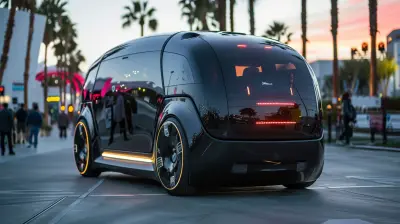
If you have ever sat in traffic, watched a delivery robot trundle down a sidewalk, or seen a test vehicle with a spinning lidar puck on its roof, you know the future has a habit of arriving without asking permission. Self-driving cars are no longer a sci-fi fantasy. They are on public roads in dozens of cities, and they are forcing lawmakers, insurers, and city planners to rewrite the rulebook while the ink is still wet.
The funny thing is, the technology is moving faster than the laws that govern it. We have vehicles that can navigate complex intersections, but we still have regulations written for an era when the biggest technological threat on the road was a manual transmission. This mismatch creates a fascinating, messy, and occasionally hilarious policy landscape. Let us dig into how autonomous vehicles are not just changing the way we drive, but changing the very rules we drive under.
The Regulatory Vacuum: When No Law Is the Law
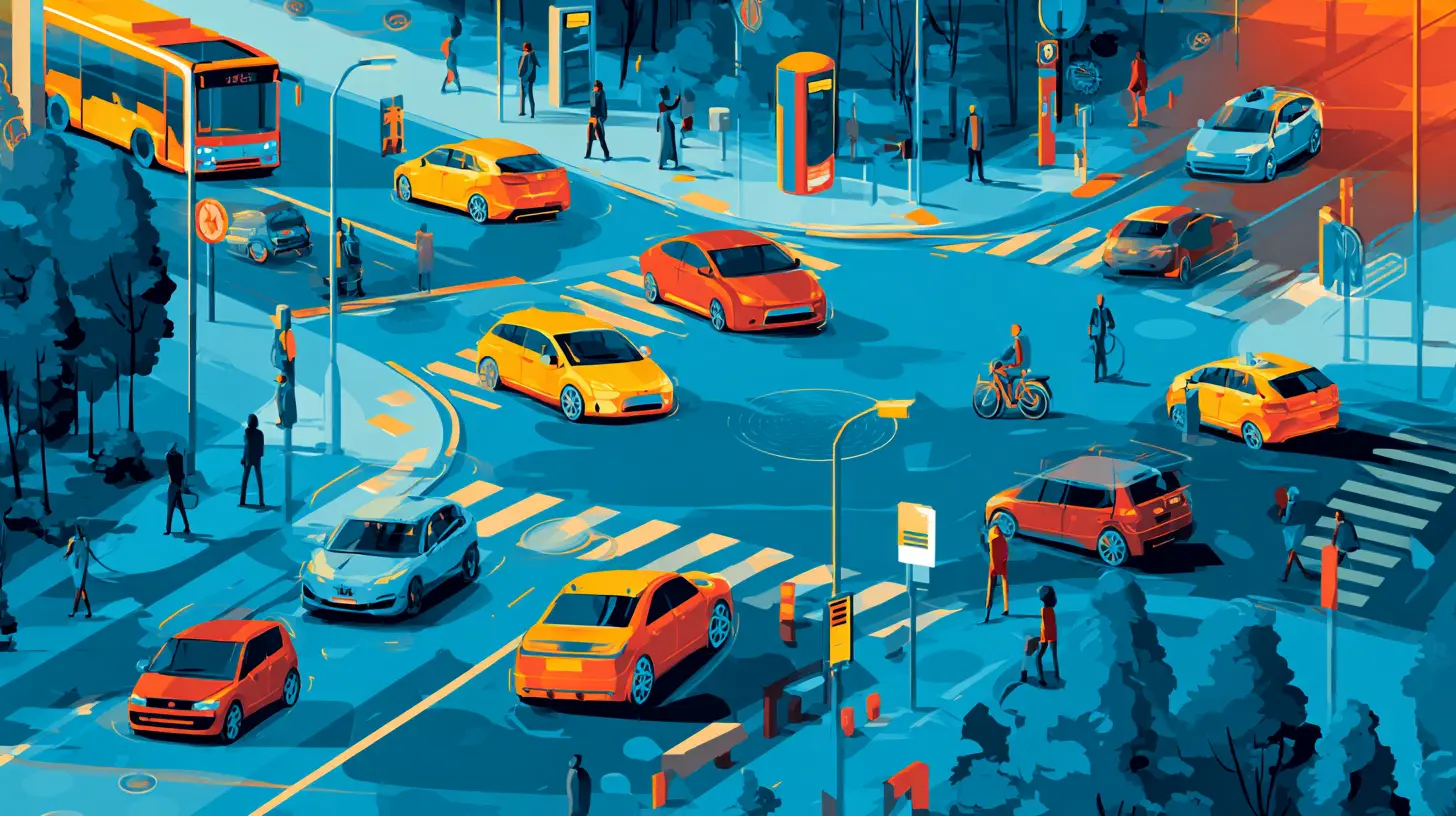
Right now, the most accurate description of autonomous vehicle regulation in many places is "organized chaos." There is no single federal standard in the United States that dictates how a self-driving car must behave. Instead, you have a patchwork of state laws, municipal ordinances, and agency guidance that sometimes contradicts itself.Take the classic example of a driverless car that gets pulled over by police. Who does the officer talk to? The car has no driver. The law says the operator must produce a license and registration. But if there is no operator, what happens? Some states have solved this by creating a new legal category called the "remote operator" or "safety driver." Others have not. In those places, the police are left to figure it out on the fly, which is about as awkward as it sounds.
This vacuum is not necessarily bad. It allows for experimentation. But it also creates massive uncertainty for companies that want to deploy across state lines. A vehicle that is legal in Arizona might be effectively banned in New York. That unpredictability is a bigger obstacle to adoption than any technical limitation.
The deeper issue is that most traffic laws assume a human is in the loop. They require a driver to be "attentive," "sober," and "licensed." A machine is none of those things. So lawmakers are being forced to ask a fundamentally new question: What does it mean to drive? And more importantly, who is responsible when something goes wrong?
Liability Shifts: From Driver to Designer
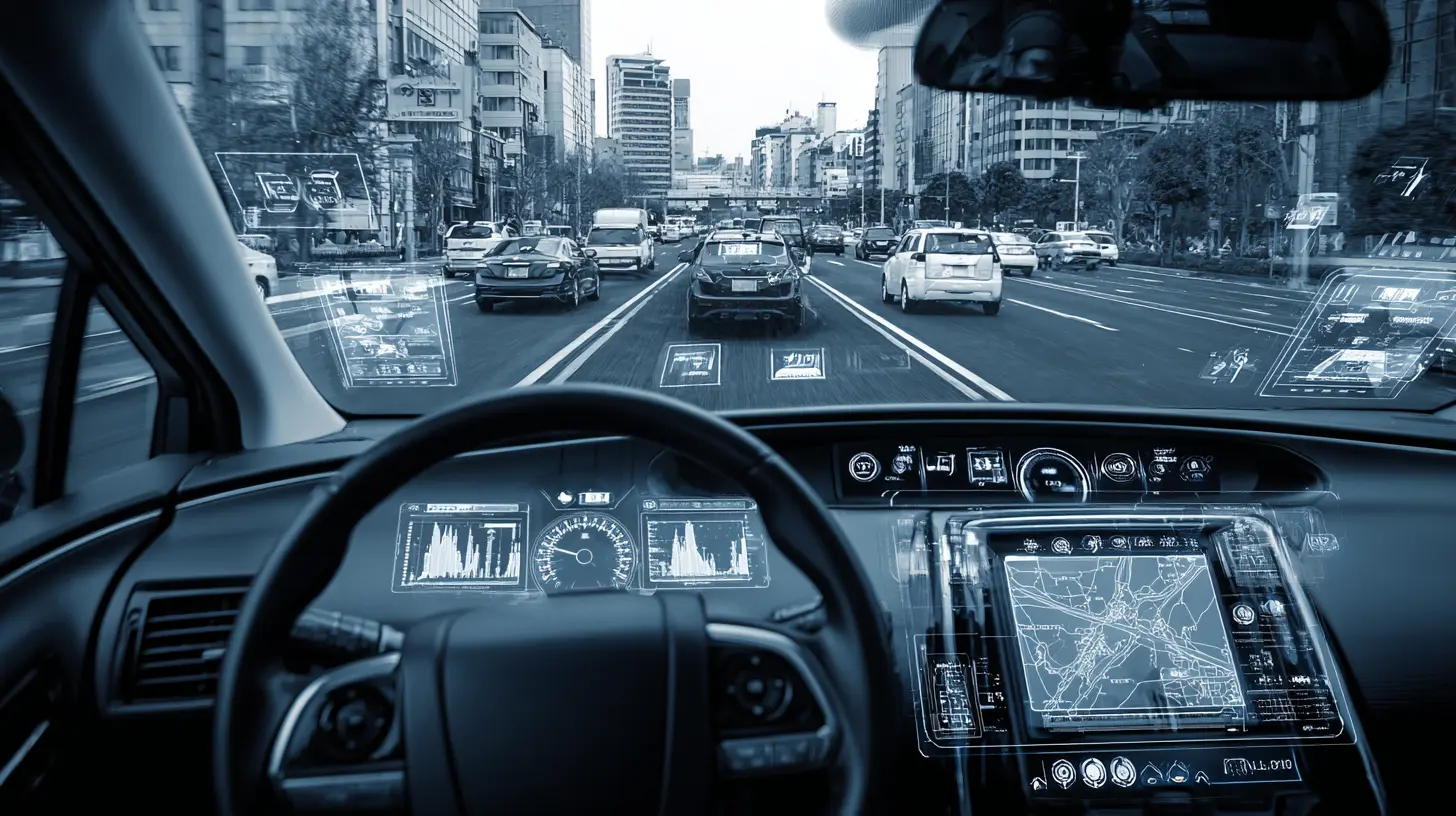
For over a century, fault in a car crash was a human story. You were speeding, you ran the light, you were distracted. Insurance companies built entire actuarial models around human error. But when a robot is at the wheel, the concept of fault changes completely.Imagine a scenario where an autonomous vehicle makes a split-second decision to swerve left to avoid a pedestrian, but in doing so, it hits a parked car. The pedestrian is safe, but property is damaged. Who pays? The passenger did not make the decision. The software did. The software was written by engineers. The engineers worked for a company. That company has deep pockets.
This is why we are seeing a slow but steady shift from personal liability to product liability. In the future, a crash involving an autonomous vehicle will likely be treated more like a defective product case than a traffic violation. That has huge implications for automakers. They will need to prove that their software was not negligent, which means they will need to log every decision the vehicle makes. That is a data nightmare, but it is also an opportunity for greater transparency.
Some legal scholars have proposed a no-fault system for autonomous vehicles, where every crash is covered by a mandatory insurance pool funded by manufacturers. That would be simpler, but it also removes the deterrent effect of liability. If a company knows it will pay regardless of fault, it might not invest as heavily in safety. This is a genuine trade-off with no perfect answer.
Insurance Premiums: The Actuaries Are Sweating
Insurance companies love predictable risk. They have spent decades perfecting their models based on human behavior. Then autonomous vehicles came along and threw a wrench into the entire system.On one hand, self-driving cars promise to drastically reduce crashes. Over 90 percent of serious crashes are caused by human error. If you remove the human, you should remove the error. That means fewer claims, which means lower premiums. On the other hand, the few crashes that do happen are likely to be more expensive because they involve complex sensors, lidar units, and proprietary software that are costly to replace.
So what is an insurer to do? Some are starting to offer policies that differentiate between manual and autonomous driving modes. If you let the car drive, your premium drops. If you take over manually, it rises. This is a clever incentive structure, but it relies on the vehicle accurately reporting who was in control at the time of an incident. That data is not always available, and there are legitimate privacy concerns about a car constantly reporting your behavior.
There is also the question of what happens to personal auto insurance entirely. If you never drive, do you need to insure yourself as a driver? Or does the coverage shift to the vehicle itself, regardless of who is inside? The industry is slowly moving toward usage-based models, where you pay for miles driven rather than a flat annual premium. Autonomous vehicles will accelerate this trend, but the transition will be rocky, and many traditional agents will find their skills less relevant.
The Curious Case of the Steering Wheel
One of the most contentious policy debates is not about software or sensors. It is about a piece of hardware that has been in every car for a century: the steering wheel.Current federal safety standards in the US require a steering wheel, pedals, and a driver's seat. That makes sense for a human-driven car. But if the vehicle is fully autonomous, do you really need a steering wheel? Removing it would free up space, reduce weight, and eliminate a source of potential injury in a crash. But it would also make it impossible for a human to take over in an emergency.
This is not just a technical question. It is a regulatory one. The National Highway Traffic Safety Administration (NHTSA) has proposed updates to allow for vehicles without traditional controls, but the process is slow. Meanwhile, some manufacturers are designing vehicles with a yoke-style controller instead of a wheel, which is a half-step that satisfies regulators but confuses drivers.
The real issue is that regulations are written for the lowest common denominator. A car without a steering wheel is fine if the software is perfect. But software is never perfect. So the question becomes: should we design for the ideal case or the realistic case? Most experts lean toward keeping some form of manual override, at least for the next decade. But that decision adds weight, cost, and complexity, and it also sends a signal to the public that the technology is not ready.
Data Privacy: The Car Is Watching You
Your car already knows more about you than your phone does. It knows where you go, how fast you drive, when you brake hard, and whether you buckle your seatbelt. An autonomous vehicle takes this to an extreme. It is essentially a rolling data center with cameras, microphones, and GPS, all feeding into a cloud server.This creates a policy nightmare around privacy. If the car records everything in its path, who owns that footage? Can the police subpoena it? Can an insurance company use it to deny a claim? Can a marketing firm buy it to target ads based on your driving habits?
There are no clear answers yet. Some states have passed laws requiring consent before a vehicle can collect biometric data. Others have not. The federal government has been silent on the issue, leaving a confusing patchwork of rules. For consumers, the advice is simple: read the privacy policy of your vehicle's software. That sounds boring, but it is more important than the owner's manual.
A related issue is cybersecurity. If a vehicle is connected to the internet, it is vulnerable to hacking. A malicious actor could theoretically take control of a car remotely. This is not just a theoretical risk; researchers have demonstrated it in controlled environments. Policymakers are starting to require cybersecurity standards for new vehicles, but the regulations are still in their infancy. The challenge is that a car will be on the road for fifteen years or more, and the software will need constant updates. Who is responsible for keeping it secure over that entire lifespan? The manufacturer? The owner? The government? Nobody has a good answer.
Infrastructure: The Road Is the Hidden Variable
Autonomous vehicles do not operate in a vacuum. They rely on lane markings, traffic signals, and road signs. If the paint is faded or the sign is obscured, the car gets confused. This is a major practical problem that policymakers are just beginning to address.In many cities, the infrastructure is decaying. Potholes, missing signs, and poorly designed intersections are everywhere. A human driver can adapt to these conditions. A robot driver, at least for now, cannot. So municipalities are faced with a choice: spend billions to upgrade the roads, or require autonomous vehicles to operate within the current limitations.
Some cities are choosing the latter. They are requiring autonomous vehicle companies to provide detailed maps of their operating areas, which they must update regularly. This shifts the burden from the public sector to the private sector. It is a pragmatic solution, but it also means that autonomous vehicles are only available in wealthy, well-mapped neighborhoods. That creates an equity problem where the benefits of the technology are not distributed evenly.
There is also the question of how autonomous vehicles interact with pedestrians and cyclists. Should a car be programmed to always yield to a pedestrian, even if the pedestrian is jaywalking? Most engineers say yes, but that can lead to situations where the car is too timid to move, causing traffic jams. Some cities are experimenting with "pedestrian-first" policies that give walkers the right of way in all situations. This is philosophically appealing, but it can break down in practice when you have a busy street and a steady stream of pedestrians.
The Federal vs. State Tug-of-War
One of the most frustrating aspects of autonomous vehicle policy is the jurisdictional battle between federal and state governments. The federal government sets vehicle safety standards. States regulate driver behavior and licensing. But an autonomous vehicle blurs the line between the two.For example, can a state ban a fully autonomous vehicle that has passed federal safety standards? The courts have not definitively answered this. Some states have tried to impose their own testing requirements, which the industry argues violates the Commerce Clause. Until the Supreme Court weighs in, we will continue to see a messy patchwork.
There is a proposal to create a federal framework that preempts state laws, similar to how the Federal Aviation Administration regulates all airspace. This would create uniformity, but it would also remove the ability of states to experiment. California, for instance, has been a leader in requiring more stringent safety reporting. If the federal government takes over, that innovation could be lost.
The best path forward is probably a hybrid approach: federal standards for vehicle hardware and software, state authority for operational rules like where and when autonomous vehicles can operate. But that requires a level of cooperation between different levels of government that is rare in any country.
The Human Factor: Training a New Kind of Driver
Let us not forget the humans in this equation. Even in a fully autonomous vehicle, someone has to be able to take over in an emergency. That someone needs training, but the training is completely different from traditional driver education.You are not learning how to parallel park or merge onto a highway. You are learning how to monitor a system, recognize when it is failing, and intervene appropriately. This is more like an airline pilot's job than a driver's job. Pilots spend most of their time monitoring autopilot, and they train for rare, high-stakes situations. That is the model we should be moving toward for autonomous vehicle operators.
This has implications for licensing. Should you need a special license to operate a vehicle in autonomous mode? Some states say yes. Others say no. The truth is that the skills required are different, and the current licensing system does not test for them. We will likely see a new category of license emerge, perhaps with a simulator component to test reaction times and situational awareness.
There is also the question of how to handle drivers who become over-reliant on automation. Studies have shown that humans are terrible at monitoring automated systems for long periods. We get bored, we get distracted, and we lose focus. This is called "automation complacency," and it is a real danger. Policymakers need to think about how to design systems that keep humans engaged, even when the car is doing most of the work.
The Global Perspective: America Is Not Alone
The United States is not the only country wrestling with these issues. Germany has passed some of the most comprehensive autonomous vehicle laws in the world, including a requirement that all such vehicles have a "black box" data recorder. Japan is moving quickly to allow autonomous delivery vehicles on public roads. China is aggressively testing robotaxis in major cities and has enacted national guidelines that are more unified than anything in the US.Each country has its own approach, and there are lessons to be learned from all of them. Germany's focus on data recording is excellent for liability and safety analysis. Japan's emphasis on delivery vehicles is practical because it addresses a clear economic need. China's top-down approach allows for faster deployment, but it also raises concerns about surveillance and data control.
For companies operating internationally, this creates a compliance nightmare. A single vehicle platform may need to be certified differently in each market. This drives up costs and slows innovation. A more harmonized global standard would help, but that is a political challenge that is unlikely to be resolved anytime soon.
What Should You Do Right Now?
If you are a policymaker, start by talking to engineers, not just lawyers. Understand the technical limitations before you write the rules. If you are a consumer, be skeptical of promises of full autonomy. The technology is impressive, but it is not perfect, and the laws are even less perfect. If you are a business owner considering autonomous delivery, start with a small pilot program in a well-defined area. Do not try to deploy across an entire city on day one.The most important thing to remember is that policy is not static. It will evolve, just like the technology. The regulations we have today are temporary by design. What matters is that we create a framework that is flexible enough to adapt as the technology improves, while still protecting public safety.
The road ahead is long, and it is full of potholes, both literal and metaphorical. But if we get the policies right, we can build a transportation system that is safer, more efficient, and more equitable than anything we have today. That is a goal worth driving toward, even if the car is driving itself.
all images in this post were generated using AI tools
Category:
Tech PolicyAuthor:

Pierre McCord