SaaS for Startups vs Enterprises: What’s the Real Difference?
30 July 2026
The software-as-a-service market has matured to the point where almost every vendor claims to serve both startups and enterprises. But anyone who has actually built, bought, or sold SaaS knows that the two worlds operate on fundamentally different principles. The real difference is not just about company size or budget. It is about the underlying assumptions about risk, growth, control, and the nature of value itself.
Understanding this distinction is critical. Choose the wrong approach for your stage, and you either burn cash on features you do not need or cripple your growth with tools that cannot scale. This article goes beyond surface-level comparisons. It examines the structural, psychological, and operational differences that define SaaS for startups versus enterprises, and what those differences mean for founders, product managers, and engineering leaders.
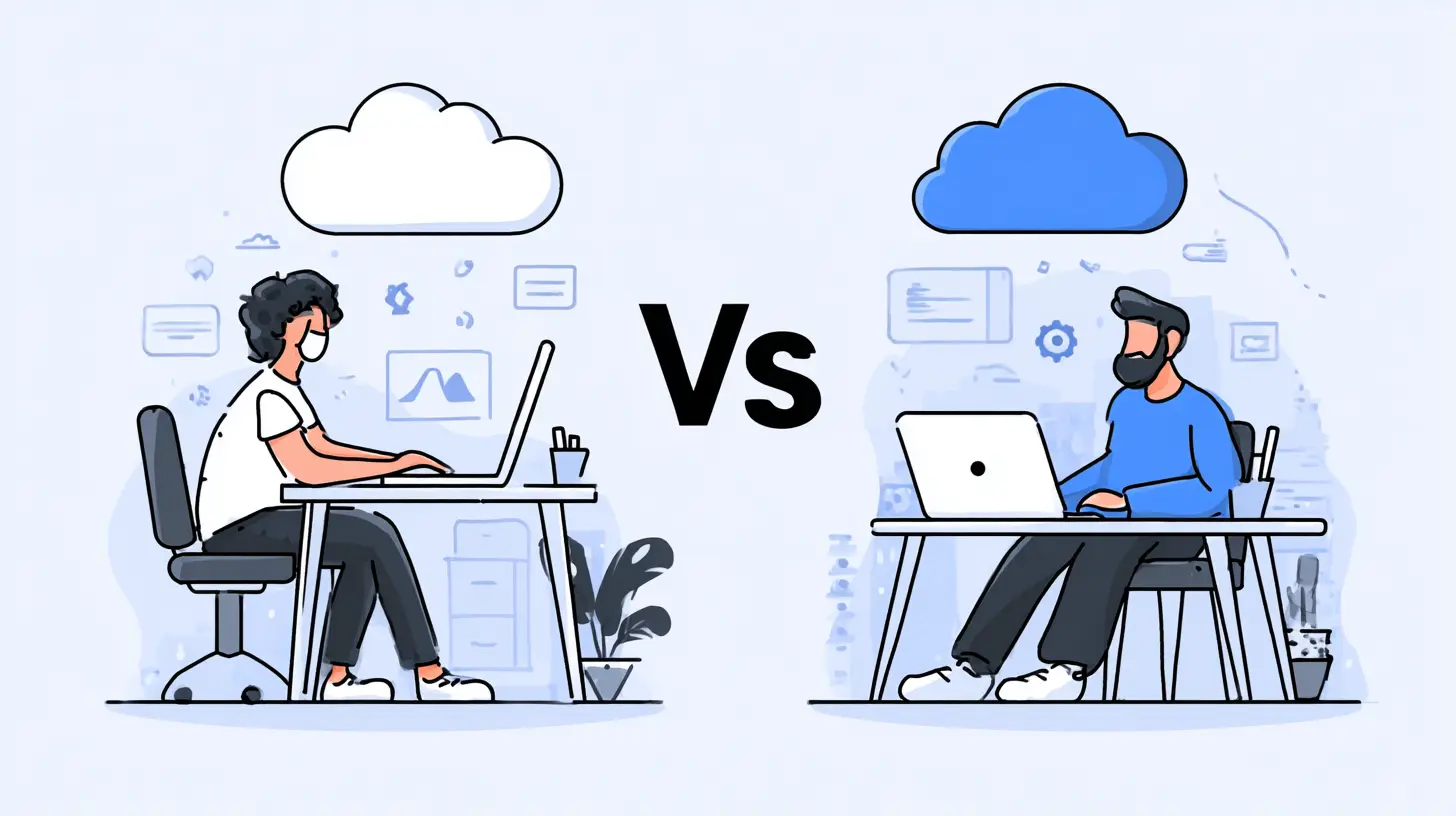
The Core Assumption: Predictability vs. Chaos
Enterprises optimize for predictability. Startups optimize for speed. That single difference ripples through every decision about SaaS architecture, pricing, support, and feature design.An enterprise buyer is typically purchasing software to reduce risk or increase efficiency in a known process. They have existing workflows, compliance mandates, and a hierarchy of approvals. The software must fit into that established order. If it breaks a compliance rule or requires retraining hundreds of employees, the cost of adoption can outweigh the benefit. Therefore, enterprise SaaS must be configurable, auditable, and backward-compatible. It must offer role-based access control, single sign-on integration with existing identity providers, and detailed logging. These are not nice-to-haves. They are table stakes.
A startup buyer, on the other hand, is often building the plane while flying it. Their processes are fluid. They may not even know what their ideal workflow looks like six months from now. For them, the most important feature is the ability to get started immediately, iterate quickly, and change direction without penalty. They value simplicity, low upfront cost, and a short time to value. A startup will forgive a missing feature if the core product is fast and intuitive. They will not forgive a 30-day onboarding process that requires a dedicated implementation consultant.
This is why many successful SaaS companies start by serving startups and then struggle to move upmarket. The product decisions that make a tool beloved by early-stage teams (minimal configuration, flat pricing, self-service onboarding) are exactly the features that enterprise buyers reject as insufficiently robust.
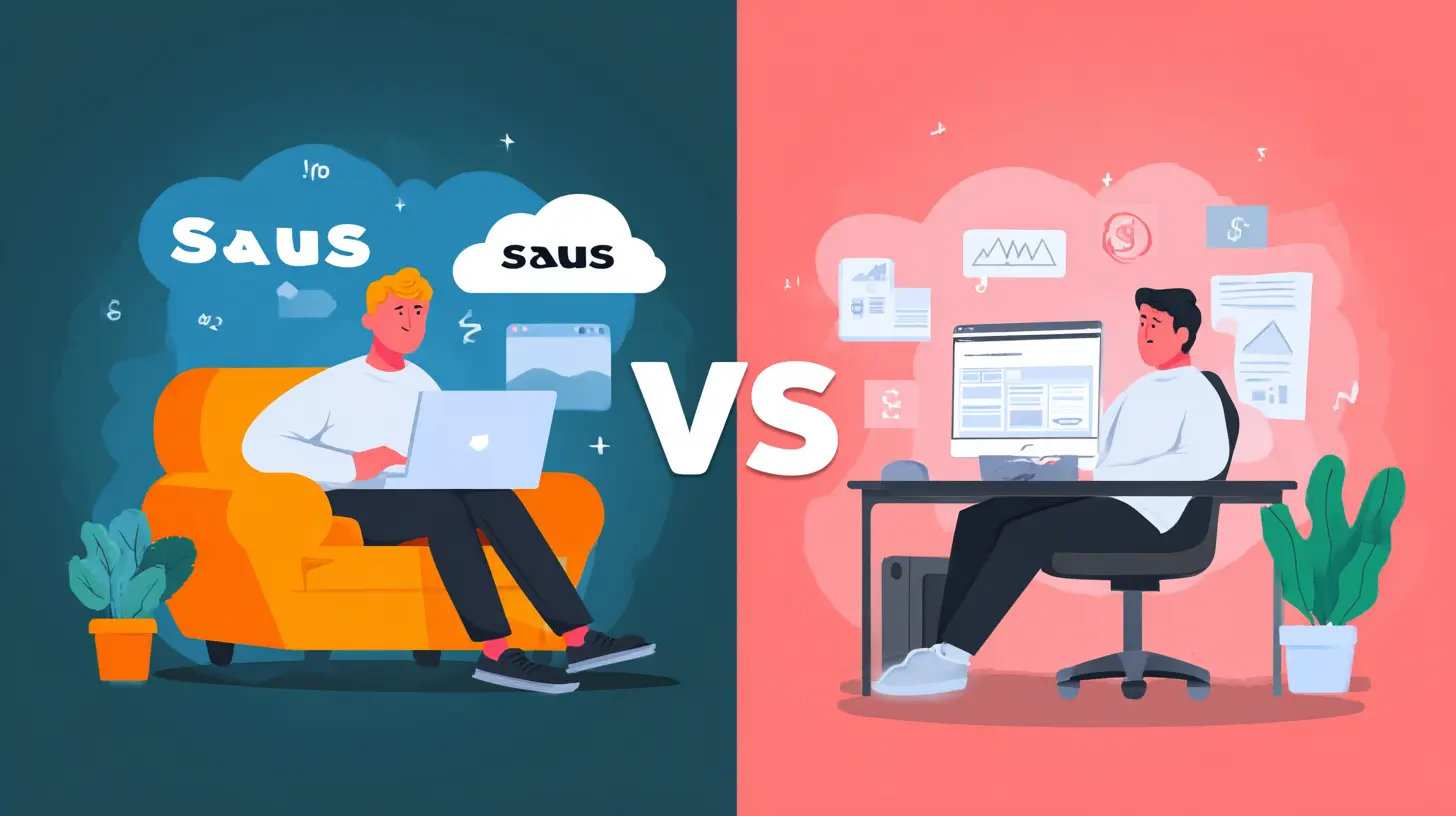
Pricing Models: Consumption vs. Commitment
One of the most visible differences is pricing. Startups typically prefer consumption-based or per-seat pricing with low entry points. Enterprises prefer annual contracts with volume discounts and predictable costs. But the real difference is not just the dollar amount. It is the relationship between price and value.For a startup, cash flow is king. They want to pay for exactly what they use now, not what they might use in the future. A SaaS tool that charges $50 per user per month is easy to understand and easy to budget for. If the startup grows from 10 to 50 users, the cost scales linearly. There is no surprise. The vendor's incentive is to make the product so valuable that the startup naturally wants to add more users.
For an enterprise, the goal is cost predictability and leverage. An enterprise buyer will negotiate a multi-year deal with a fixed price per user or a consumption floor. They want to know that their annual software spend will not spike unexpectedly due to user growth or usage spikes. They are also willing to pay a premium for features like dedicated support, custom integrations, and data residency guarantees. The enterprise is not just buying software. They are buying a relationship with the vendor, including the right to escalate issues and demand fixes.
A common mistake that SaaS companies make is trying to serve both segments with a single pricing model. If you offer only per-user pricing, large enterprises will demand a cap or a discount that destroys your unit economics. If you offer only annual contracts, startups will walk away because they cannot commit to a year of a tool they might abandon next quarter. The solution is often a tiered model: a self-service, month-to-month plan for startups, and an enterprise plan with custom pricing, contract terms, and SLAs. But even that creates tension, because the enterprise plan must be different enough to justify the higher price, yet similar enough to maintain a single codebase.

Feature Depth vs. Breadth
Enterprise SaaS tends to be deep. Startup SaaS tends to be broad. This is a generalization, but it holds true in practice.Enterprises need software that handles edge cases. They have employees in different countries with different tax laws. They have legacy systems that must be integrated. They have security policies that require data to be encrypted at rest and in transit, with audit trails for every action. An enterprise CRM, for example, must handle complex territory assignments, approval workflows for discounts, and reporting that rolls up to a CFO who wants to see pipeline by region, product line, and sales rep tier. Building this depth is expensive and slow. It requires domain expertise and a willingness to say no to new features in favor of perfecting existing ones.
Startup SaaS, by contrast, often succeeds by being good enough at many things. A startup project management tool might not have the advanced resource leveling of an enterprise solution, but it integrates with Slack, GitHub, and Google Drive out of the box. It takes five minutes to set up. The team can start using it immediately without reading a manual. That breadth of integration and ease of use is more valuable to a startup than depth in any single area.
The trade-off is real. Startups that rely on broad-but-shallow tools eventually hit a wall. They need a feature that the tool does not support, and the vendor refuses to build it because it is too niche. That is when they start looking at enterprise solutions. Conversely, enterprises that try to use startup-focused tools often find themselves frustrated by the lack of configurability. They need to enforce a workflow that the tool cannot express.
Support and Success Models
Startup SaaS typically relies on self-service support: knowledge bases, community forums, and chatbots. The expectation is that the user is technically savvy and willing to troubleshoot on their own. If they need help, they can send an email and get a response within a few hours. This model works because startups have fewer users and lower stakes. A 30-minute outage is annoying but not catastrophic.Enterprise SaaS requires a different support model. Enterprises demand SLAs with guaranteed response times, often measured in minutes for critical issues. They want a dedicated account manager who knows their business. They want quarterly business reviews where the vendor shows how the software has improved the enterprise's metrics. They want escalation paths that go directly to engineering if a bug is blocking a major initiative.
This support model is expensive to maintain. It requires hiring customer success managers, solution architects, and support engineers who can handle complex technical and business questions. The cost is justified because enterprise contracts are large enough to cover it. But it creates a cultural divide. A company that is used to selling to startups might struggle to provide the white-glove service that enterprises expect. They might hire salespeople who know how to close a deal but not how to manage a long-term relationship.
A real-world example: a SaaS company that provided analytics for mobile apps started with a self-service model. Their users were indie developers who paid $29 per month. When they tried to sell to a large media company, the enterprise buyer asked for a dedicated support team, a custom data pipeline, and a 99.99% uptime guarantee. The vendor had to build an entirely new support organization to deliver that. They could not simply add a "premium support" tier to their existing plan. They had to change their hiring, their training, and their internal processes.
Security, Compliance, and Data Governance
This is perhaps the most non-negotiable difference. Enterprises operate under regulatory frameworks: GDPR in Europe, HIPAA in healthcare, SOC 2 in technology services, PCI DSS in payments. They need SaaS vendors to provide evidence of compliance, not just promises. They want to see audit reports, penetration test results, and data processing agreements. They may require that data be stored in a specific geographic region or that the vendor offer a dedicated instance of the software.Startups rarely have these requirements. They might have basic security practices, but they are not going to pay for a SOC 2 audit or a dedicated server in Frankfurt. They are willing to accept a shared infrastructure with standard encryption because the risk profile is lower. Their data is less sensitive, and the consequences of a breach are less severe.
The mistake some SaaS vendors make is treating security as a checkbox rather than a design principle. They build a product for startups, then try to retrofit enterprise security features. This almost never works. True enterprise-grade security must be architected from the ground up. It affects database schema, API design, logging infrastructure, and even the way the product handles user authentication. Adding SSO after the fact is painful. Adding granular role-based access control to a system that was designed with flat permissions is nearly impossible without a rewrite.
Conversely, building too much security into a startup product can kill it. If you require every user to go through a multi-factor authentication setup and sign a data processing agreement before they can try the product, you will lose a lot of potential customers. The key is to have a clear boundary: a standard tier that is secure enough for most startups, and an enterprise tier that meets regulatory requirements.
Sales Process: Transactional vs. Consultative
The sales motion for startups is transactional. A founder or a team lead identifies a need, evaluates a few options, and makes a decision within days or weeks. The buyer is often the user. There is no procurement department, no legal review, no security questionnaire. The sale happens online, often without any human interaction from the vendor.The sales motion for enterprises is consultative and long. It involves multiple stakeholders: the end users who will actually use the software, their managers, the IT department, the security team, legal, procurement, and sometimes the C-suite. Each stakeholder has different concerns. The end users want ease of use. IT wants integration with existing systems. Security wants compliance documentation. Legal wants to negotiate the contract terms. Procurement wants to get a discount.
A SaaS company that tries to use a transactional sales process for enterprise buyers will fail. They will send a self-service link and wonder why the deal never closes. The enterprise buyer needs a salesperson who can navigate the organization, address each stakeholder's concerns, and build a business case that justifies the purchase. They need a proof of concept that demonstrates the software working in their environment with their data.
This is why many SaaS companies create a separate enterprise sales team with a different compensation structure, different training, and different metrics. The startup sales team is measured on number of signups and conversion rates. The enterprise sales team is measured on deal size, contract value, and sales cycle length. The two teams cannot be managed the same way.
Product Roadmap: Feedback Loops and Priorities
The feedback you get from startups is different from the feedback you get from enterprises. Startups tend to ask for features that make the product faster, simpler, or more integrated with other tools they use. They want to move faster. They rarely ask for features that add complexity or control.Enterprises ask for features that add control: audit logs, approval workflows, custom fields, role-based permissions, API rate limiting, data export tools. They want to slow things down in a controlled way. They want to ensure that no one can accidentally delete critical data or bypass a compliance rule.
Balancing these two feedback loops is one of the hardest challenges for a SaaS product manager. If you build only for startups, you will never get the enterprise deals that provide stable revenue. If you build only for enterprises, you will lose the startup market that provides growth and innovation. The best approach is to have a clear product strategy that defines which segment you are optimizing for at each stage of the company's lifecycle. Many successful SaaS companies started by serving startups, then gradually added enterprise features as they grew. The key is to do this deliberately, not reactively.
Common Misconceptions
One common misconception is that startups will eventually grow into enterprises, so you should build for the enterprise from the start. This is rarely true. The startups that succeed often pivot multiple times. They may change their target market, their business model, or their entire product. Building enterprise features before you have product-market fit is a waste of resources. You are building for a future that may never come.Another misconception is that enterprise buyers are always willing to pay more. They are willing to pay more for things they value, but they are also sophisticated negotiators. They know that SaaS vendors have high margins and are willing to offer discounts. An enterprise deal at 50% off list price is common. A startup deal at full price is common. The net revenue per user may be similar.
A third misconception is that enterprise SaaS is always more profitable. Enterprise deals have higher acquisition costs, longer sales cycles, and ongoing support costs. The lifetime value of an enterprise customer can be high, but so is the cost to serve them. Startup customers are cheaper to acquire and cheaper to support, but they churn at higher rates. The economics depend on your specific business model.
Best Practices for Each Segment
If you are building SaaS for startups, focus on time to value. Make the onboarding process as fast as possible. Offer free trials or freemium tiers. Use email and in-app messaging to guide users to the "aha moment" where they realize the product's value. Keep pricing simple. Avoid asking for a credit card until the user has experienced value. Prioritize integrations with the tools that startups commonly use: Slack, GitHub, Google Workspace, Stripe, and Zapier.If you are building SaaS for enterprises, invest in documentation, compliance, and support. Get SOC 2 certification early, even if you are not required to. Build a strong API that allows enterprises to integrate the product into their existing stack. Hire a customer success team that can handle complex implementations. Be prepared to negotiate pricing and contract terms. Build features that give administrators control: SSO, audit logs, data retention policies, and user management.
If you are trying to serve both segments, create clear boundaries between the product tiers. Do not let enterprise features leak into the startup tier, because they will add complexity that startup users do not want. Do not let startup simplicity prevent you from building the depth that enterprises need. Use feature flags to control which users see which features. Maintain separate documentation for each tier. And most importantly, be honest with yourself about which segment is more important to your business right now.
The Real Difference
The real difference between SaaS for startups and enterprises is not about features or pricing. It is about the relationship between the vendor and the customer. Startups want a tool that gets out of their way and lets them move fast. Enterprises want a tool that gives them control and reduces risk. One is about acceleration. The other is about stability.A SaaS company that understands this difference can build a product that serves both segments without compromising either. But it requires discipline, clarity, and a willingness to say no to features that serve one segment at the expense of the other. The companies that get this right are the ones that become category leaders. The ones that get it wrong end up stuck in the middle, too complex for startups and too simple for enterprises.
all images in this post were generated using AI tools
Category:
Saas ToolsAuthor:

Pierre McCord