Virtual Meeting Problems and How Tech Will Solve Them Soon
14 August 2026
If you have spent any time in a corporate environment since 2020, you know the drill. You join a call, someone says "you are on mute," the video freezes on a face mid-sentence, and the chat explodes with side commentary while the presenter keeps talking. Virtual meetings have become the backbone of distributed work, but they are still far from good. The problems are not just annoying. They cost time, money, and mental health. And the solutions are not coming from better etiquette or longer agendas. They are coming from technology that changes the fundamental structure of how we meet.
The shift to remote and hybrid work was sudden. The tools we use were built for a world where everyone was in an office and meetings were a supplement, not the primary mode of collaboration. Now that meetings are the main event, the cracks are showing. But the next few years will bring a wave of fixes that address the root causes, not just the symptoms. Let's break down the biggest problems and the specific tech that will solve them, and soon.

The Attention Crisis: Why Your Brain Checks Out
The most common complaint about virtual meetings is fatigue. It is not just in your head. Video calls demand a different kind of attention than in-person conversations. You are staring at a screen, processing multiple faces in tiny boxes, trying to read body language that is often delayed or missing, and simultaneously monitoring your own image to see if you look presentable. That is a cognitive overload.In person, your brain naturally filters out background noise and focuses on the speaker. On a video call, every participant is a potential source of information. Your brain tries to process all of them at once, and it gets exhausted quickly. This is why you feel drained after a 30-minute call that would have been a quick chat in the office.
The tech fix is not going to be a magic pill that makes you pay attention. It is going to be a shift in how AI handles visual and auditory streams. We are already seeing the first hints of this with automatic transcriptions and live captions. But the next step is smarter. AI will soon be able to detect who is actually speaking, highlight their video feed automatically, and suppress the visual noise from people who are just listening. This is called "speaker emphasis" and it is already being tested in some platforms. The idea is that your brain only needs to look at one face at a time, the person who is currently talking.
Another angle is asynchronous video. Tools like Loom and Async are already popular, but they are primitive. They just record a screen and a face. The next generation will use AI to segment the content, add chapters automatically, and even generate a written summary with key decisions. This means you do not have to be present for a live meeting at all. You can consume the content in five minutes instead of fifty. That is the real cure for meeting fatigue: not attending the meeting.

The Technical Debt of Bad Audio
Video gets all the attention, but audio is the real problem. A choppy audio stream destroys a meeting faster than any frozen screen. The human brain can tolerate bad video, but bad audio forces it to work overtime to fill in the gaps. After a few minutes, you are exhausted just trying to understand what people are saying.The current state of audio in virtual meetings is poor because most platforms still use a "mix-minus" approach that tries to balance all participants. If one person has a fan running or a dog barking, the AI has to decide what is speech and what is noise. Most of the time, it gets it wrong.
The next big leap is spatial audio and AI-driven noise isolation. Spatial audio is not just for headphones. It allows the software to place each participant in a virtual 3D space. So if two people speak at the same time, your brain can separate them naturally, just like in a crowded room. This is a massive cognitive relief. Several platforms are already experimenting with this, and it will become standard within three years.
Noise isolation is also getting much smarter. The current generation removes background hum, but it also clips the edges of words, making speech sound robotic. The next generation will use deep learning models that have been trained on thousands of hours of real conversations. These models will understand context. If you are talking about a project and a siren goes by outside, the AI will not just mute the siren. It will also enhance your voice in that exact moment, so the siren is barely a blip. This is not science fiction. It is already in beta in some enterprise audio platforms.
A practical tip for today: buy a good microphone. The built-in mic on a laptop is a disaster. A USB mic with a cardioid pattern will do more for your meeting quality than any software upgrade. But the software side is catching up fast, and soon the gap between a cheap mic and an expensive one will shrink because the AI will fix the audio after it is captured.
The Meeting Scheduling Nightmare
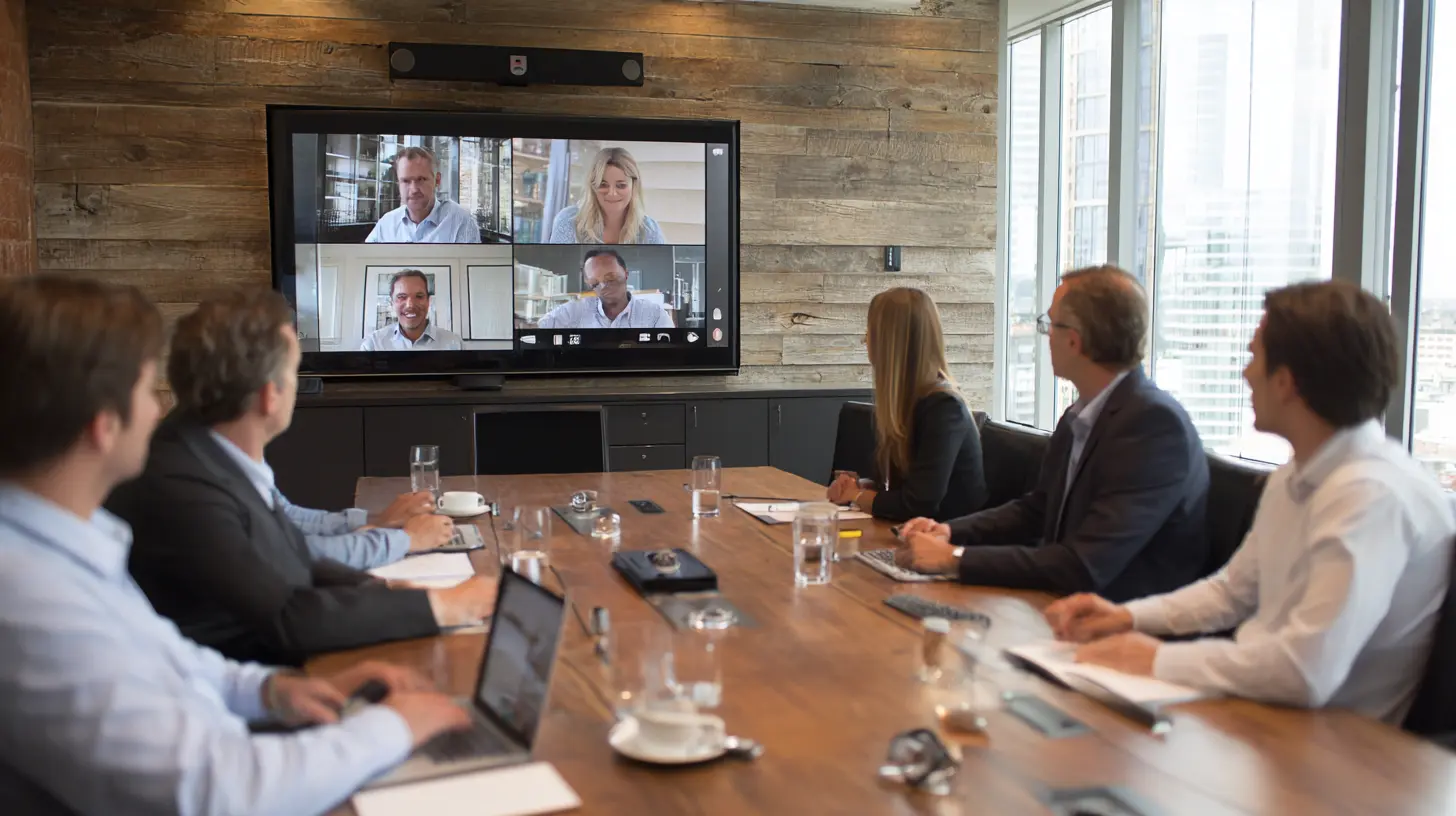
Scheduling a meeting across time zones is still a manual, error-prone process. You send an email, someone replies with three options, you pick one, someone else says they are busy, and you start over. This is a massive drain on productivity. The problem is not the calendar. The problem is that calendars are static. They do not understand context.The solution is AI-powered scheduling agents that do not just check availability but understand the purpose of the meeting. A tool like this will look at the agenda, the participants, and their current workloads. It will then propose a time that works for everyone, but it will also flag if the meeting is necessary at all. For example, if the meeting is just a status update, the AI might suggest sending a written report instead. This is the "meeting elimination" feature that no one talks about but everyone needs.
The next level is autonomous scheduling that integrates with your email and chat. You get an invitation, and the AI checks your calendar, your deadlines, and your focus time. It then accepts, declines, or proposes a new time without you touching anything. This is already being rolled out in some productivity suites, but it is still clunky. The future version will learn your preferences. If you always avoid meetings on Monday mornings, the AI will learn that and block those times automatically.
A common mistake is thinking that more scheduling options are better. They are not. Too many choices lead to decision paralysis. The best scheduling tools will present only one or two optimal times, not a grid of every possible slot. This reduces cognitive load and speeds up the entire process.
The Hidden Cost of Meeting Recording and Transcription
We record almost everything now. The assumption is that recording is safe, and we can always go back and check. But this creates a false sense of security. Most recordings are never watched. The files sit in a cloud folder, taking up space, and no one ever looks at them. The problem is not the recording. It is the retrieval.Searching a one-hour video for a specific decision is painful. You have to scrub through the timeline, listen to snippets, and hope you find the right part. The tech fix is AI-powered semantic search. This means you can type a question like "what did we decide about the budget for Q3?" and the system will find the exact moment in the recording where that was discussed, show you the transcript, and even summarize the decision. This is not a transcript. It is a knowledge base.
The next generation of meeting platforms will treat every recording as a searchable document. They will automatically extract action items, decisions, and owners. They will then push these into your project management tool. So the meeting does not end when the call ends. It ends when the action items are tracked and assigned. This is the missing link between conversation and execution.
A major misconception is that you need a separate AI tool for this. The reality is that the major platforms are building this in natively. The advantage is that they already have the audio and video, so they do not need to upload anything. The result will be a seamless workflow where you never have to think about the recording again.
The Death of the Screen Share
Screen sharing is the most primitive part of virtual meetings. It was designed for a world where one person presents and everyone else watches. That is not how collaboration works. In a good meeting, people are co-creating, not just viewing. The current screen share forces a hierarchical structure. The presenter controls the cursor, and everyone else is a passive observer.The tech fix is collaborative canvases and live documents. Instead of sharing a static screen, you share a live document that everyone can edit at the same time. This is already possible with tools like Google Docs and Figma, but the integration with video calls is still weak. The next step is a unified interface where the video, the document, and the chat are all in the same space, and the AI can move the focus based on what is being edited.
Imagine a meeting where the AI detects that two people are editing the same section of a document. It automatically splits the screen to show both of them working, and it highlights the changes in real time. This is not just a better screen share. It is a different way of meeting. It is about doing, not talking.
The trade-off is that this requires a change in meeting culture. Many people still expect a "presentation" style meeting. But the tech will force the change because it will make the old style feel obsolete. Once you have been in a meeting where everyone is actively editing and the AI is tracking changes, going back to a static slide deck feels like watching a VHS tape.
The Loneliness Problem and the Rise of Virtual Presence
A less obvious problem with virtual meetings is the lack of social presence. You cannot feel the room. You cannot sense when someone wants to speak but is hesitating. You cannot see the subtle nods and eye contact that build trust. This is why many teams feel disconnected even though they meet every day.The tech solution is not VR, at least not yet. VR headsets are still too heavy and isolating. The near-term fix is "presence technology" that uses your webcam to create a more lifelike avatar or a more accurate representation of your body language. Some platforms are already using eye-tracking to make it look like you are making eye contact, even when you are looking at the screen. This sounds small, but it has a big impact on trust.
Another approach is ambient video. Instead of a formal meeting, some teams keep a video feed open in the background, like a virtual office. You can see your colleagues working, and you can walk over and talk to them, just like in a real office. This is not a meeting. It is a presence. The tech that makes this work is low-latency video streaming and AI-powered background removal, so it does not feel like a surveillance camera.
The misconception is that this is for extroverts only. In reality, introverts benefit more because they can control the level of interaction. They can see who is available and choose to approach or not. This is a form of social agency that is impossible in a physical office. The tech is not replacing human interaction. It is giving people more control over it.
The Security and Privacy Nightmare
Virtual meetings have a security problem that most people ignore. You are transmitting audio and video over the internet, and that data can be intercepted, recorded, or leaked. The recent incidents of "Zoom bombing" were just the tip of the iceberg. The bigger issue is that meeting content often contains sensitive business information, and the current encryption standards are not always strong enough.The tech fix is end-to-end encryption, but it is more complex than it sounds. End-to-end encryption prevents the server from seeing the content, but it also prevents the server from providing features like live transcription or AI summaries. This is a fundamental trade-off. You cannot have both privacy and advanced AI features, unless the AI runs locally on your device.
The future of secure meetings is on-device processing. Your laptop will do the transcription, the noise reduction, and the summarization locally, and only the final text summary will be sent to the server. This means your raw audio and video never leave your machine. This is a huge step forward for privacy, and it is already being implemented in some niche products. The major platforms will follow, but it will take time because it requires a significant investment in client-side computing power.
A practical consideration is that you should not be sharing sensitive information in a meeting that uses free consumer tools. If you are discussing a merger or a legal strategy, you need enterprise-grade security. The tech is coming, but for now, you have to make a conscious choice between convenience and privacy.
The Meeting Itself Is the Problem
Here is the uncomfortable truth that no technology can solve: most meetings should not exist. The tech fixes I have described will make meetings better, but they will not make meetings necessary. The real solution is to reduce the number of meetings you have. And the tech that will help with that is the same AI that makes meetings searchable and asynchronous.If a meeting can be replaced by a well-written document, a short video message, or a collaborative comment thread, then it should be. The tech is not about making meetings more efficient. It is about making them obsolete when they are not adding value. The best virtual meeting tool is the one that tells you not to have the meeting.
This is a cultural shift, not a technical one. But the tech can enable it. For example, an AI scheduling assistant can look at a proposed meeting and ask, "What is the desired outcome?" If the outcome is just to share information, it can suggest a recording instead. If the outcome is to make a decision, it can suggest a structured decision-making framework. This kind of nudge will change behavior over time.
A common mistake is to assume that more technology means more meetings. The opposite is true. The right technology gives you the confidence to skip a meeting because you know you will not miss anything. That is the ultimate goal.
What You Should Do Right Now
While you wait for these technologies to mature, there are a few things you can do to improve your virtual meetings today. First, use a wired internet connection whenever possible. Wi-Fi is convenient but prone to jitter, which affects audio quality. Second, turn off your own video when you are not speaking. This reduces your cognitive load and frees up bandwidth for the speaker. Third, set a strict agenda with time limits for each item. A meeting without an agenda is a waste of time, and the tech cannot fix that.Fourth, use the chat function aggressively. It is not a distraction. It is a parallel channel for questions and comments. The speaker can monitor the chat and answer questions without interrupting the flow. Fifth, record the meeting and assign someone to take notes. Do not rely on the AI transcription alone. The act of taking notes forces a human to summarize and prioritize, which is something AI cannot do yet.
The future of virtual meetings is not about making them feel more like in-person meetings. It is about making them better than in-person meetings. That means using AI to handle the cognitive load, to eliminate scheduling friction, to make content searchable, and to give you back your time. The technology is almost here. The question is whether you are ready to change your habits to use it.
The next time you join a call and someone says "can you hear me now," remember that this is a temporary phase. Within a few years, that phrase will be as outdated as a fax machine. The tech is solving the problems, but only if you let it.
all images in this post were generated using AI tools
Category:
Virtual MeetingsAuthor:

Pierre McCord