Why Graphics Cards Are Essential for Running Modern Game Engines
14 July 2026
If you've ever wondered why your latest game lags or why your PC wheezes louder than a vacuum cleaner when booting up a new title, you're not alone. The real culprit is often hiding in plain sight — your graphics card, or more importantly, the lack of a good one.
In this article, we're diving deep into why graphics cards, or GPUs (graphics processing units), are absolutely critical for running modern game engines. If you’re even remotely into PC gaming, content creation, or just want to understand how your favorite video games perform those stunning stunts and visuals, buckle up. This one’s for you.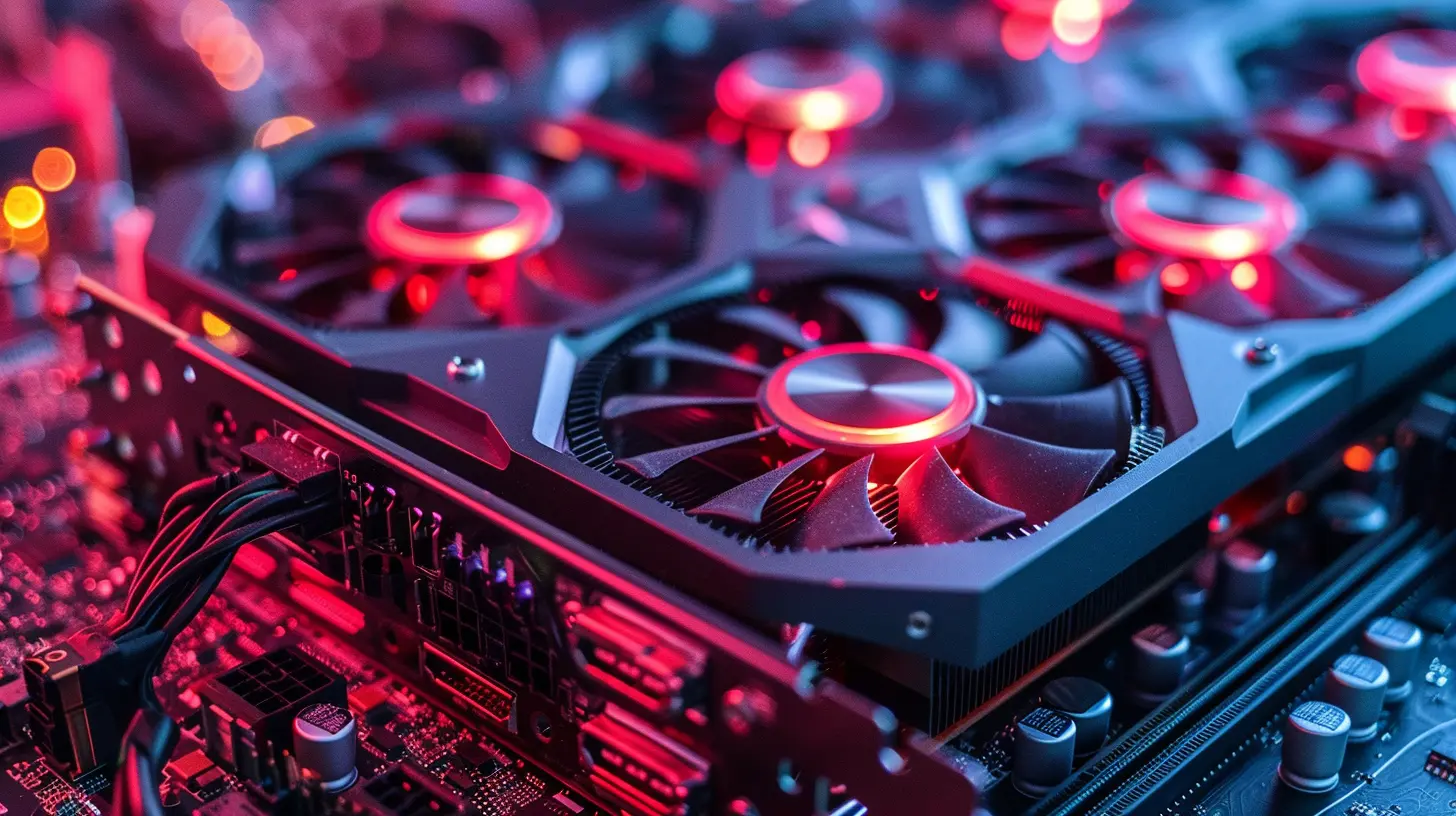
What Exactly Is a Graphics Card?
Alright, before we get lost in the weeds, let's define this tech marvel. A graphics card is a specialized piece of computer hardware dedicated to rendering images, animations, and videos. That’s its job — and it does it darn well.Think of it as the artist of your PC. The CPU is the manager, making decisions and keeping things running, but the GPU paints the picture. Literally.
Modern GPUs come with thousands of cores optimized for processing large blocks of visual data in parallel. This makes them ideal for handling the intense graphical computations that today’s games demand.
Breaking Down the Modern Game Engine
Let’s get one thing straight — game engines today are monsters. Epic Games' Unreal Engine and Unity are just two of the big names, but they’re all doing one thing: pushing the limits of real-time graphics processing.Game engines manage things like:
- Realistic lighting (hello, ray tracing!)
- Physics simulations (those explosions aren't just for show)
- AI behaviors
- Texture mapping
- 3D modeling and animation
Do you think your PC’s integrated graphics chip can handle all that? Spoiler: it can’t. Without a dedicated GPU, your machine is essentially trying to do parkour in flip-flops.
Why Graphics Cards Are the Heart of Modern Gaming
Here’s a truth bomb: without a dedicated GPU, modern game engines might as well be showing you PowerPoint slides instead of gameplay.1. Real-Time Rendering Like a Pro
When you’re gaming, every frame matters. And by "every frame," we're talking about rendering possibly 60 or even 120 frames per second.Graphics cards are tailored for real-time rendering. They chew through frame data, process lighting, handle shadows, and apply textures — all in milliseconds. Try asking your CPU alone to do that; it’ll file a complaint.
2. Ray Tracing: The Gold Standard
Ray tracing is one of the crown jewels of modern graphics. It mimics how light behaves in the real world, bouncing off surfaces, refracting through glass, and creating realistic shadows.This tech isn't just fancy — it’s resource-hungry. Only advanced GPUs with ray tracing capabilities (like NVIDIA’s RTX line or AMD’s RX 6000 series) can handle this without turning your PC into a space heater.
3. High-Resolution Textures
Today’s games aren’t messing around with 8-bit graphics anymore. They're serving up ultra-HD textures, volumetric fog, and hair strands that move with the wind (seriously).These textures take up a ton of video memory (VRAM), and your graphics card directly determines how much of it you can load at once. A weak GPU equals pop-in textures and laggy visuals.
4. Advanced Physics Calculations
Sure, physics might’ve bored you in school, but in games? It’s where the magic happens.From destructible environments to ragdoll mechanics, modern game engines simulate complex physics equations in real time. A capable GPU ensures these processes run smoothly, without turning gameplay into a slideshow.
5. AI and Computational Workloads
Believe it or not, GPUs are also involved in more than just visuals. With compute shaders, game engines offload certain AI tasks and background logic to the GPU.Why? Because they can do it faster.
GPUs are built for parallel processing. CPUs are great for single-threaded tasks, but when it comes to managing dozens of simultaneous actions — GPUs win hands down.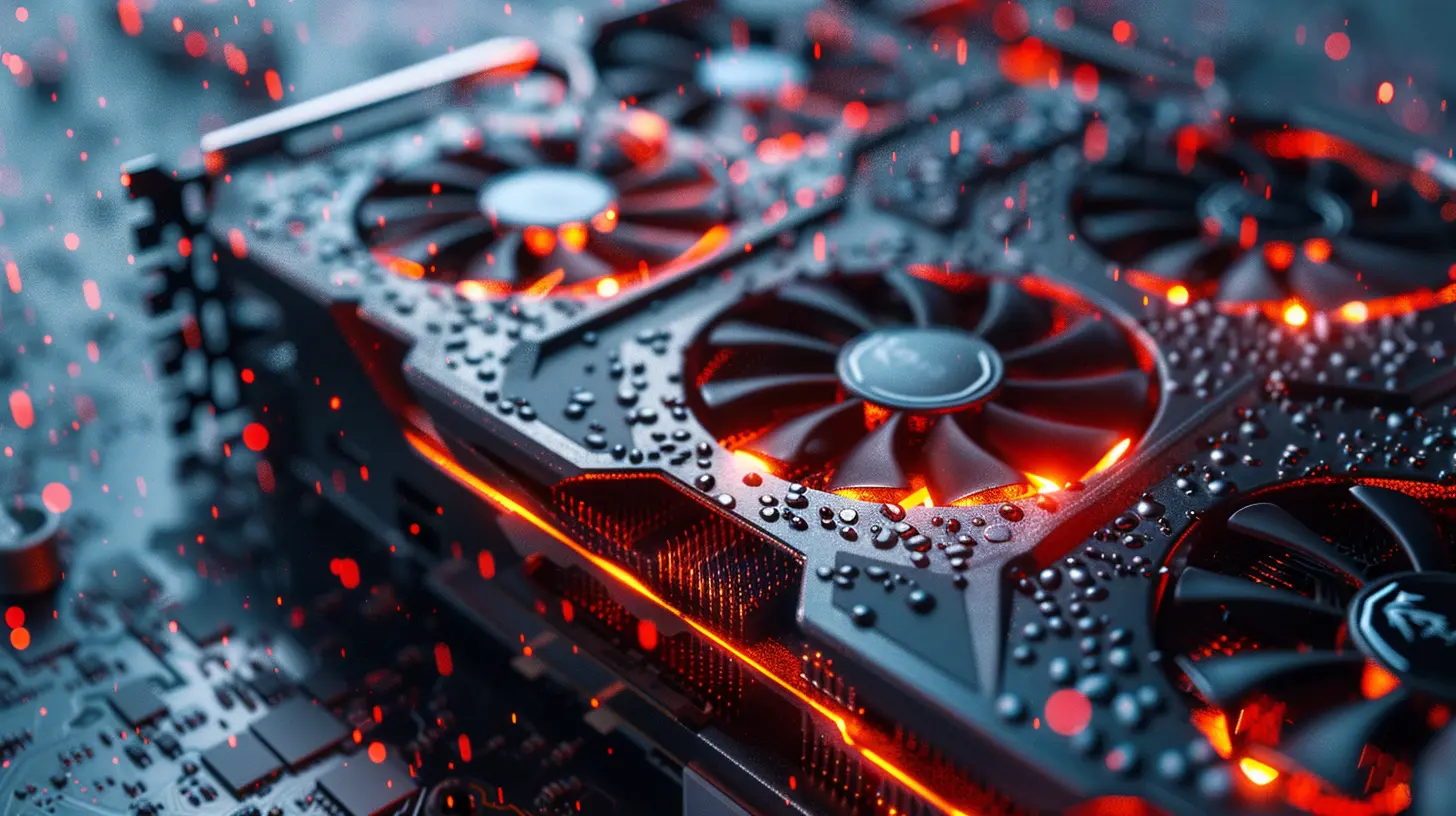
The CPU vs. GPU Debate — Do You Need Both?
Let’s get this straight: your CPU is important. It drives decisions, manages game logic, and keeps the system humming.But when it comes to graphical tasks, it's like comparing a librarian to an artist. Both are smart, but you wouldn’t ask the librarian to paint a double rainbow across a photorealistic sky.
A high-end CPU paired with a weak GPU = bottleneck.
A powerful GPU with a mid-range CPU? That’s more balanced. For gaming, the graphics card often has more impact on visual fidelity and frame rates.
VR Gaming and Graphics Demands
Let’s not forget VR gaming — possibly the most demanding gaming application out there. Rendering two separate images (one for each eye) at high frame rates is brutal on hardware.Run VR with an outdated graphics card and you’ll get motion sickness and jagged visuals. Not ideal.
A beefy GPU ensures consistent frame delivery, fluid motion, and immersive experiences that don’t make you want to toss your VR headset out the window.
4K, High Refresh Rates, and Performance
Gamers today are all about smooth gameplay. We want 4K resolution, 144Hz refresh rates, and ultra-settings without a hitch.Good luck achieving that without a strong GPU.
The jump from 1080p to 4K isn’t just a few extra pixels — it’s four times the data. That means your GPU needs to work exponentially harder. Likewise, pushing 120 frames per second instead of 60 doubles the workload.
If you’re aiming for buttery-smooth gameplay, a solid graphics card isn’t optional — it’s mandatory.
Game Development and Content Creation
Game engines aren’t just for playing games — they’re for making them too. Developers and creators rely heavily on GPUs for rendering previews, building environments, prototyping lighting, and testing animations.Imagine trying to sculpt with a butter knife. That’s what game dev is like without a good GPU.
Many engines now support GPU acceleration for building lighting maps, rendering cinematics, and compiling shaders. Without a decent graphics card, expect long wait times and a whole lot of frustration.
Integrated Graphics: Why They're Not Enough
Most CPUs nowadays come with integrated graphics. And sure, they’re fine for spreadsheets or watching movies. But for modern games? They fold faster than a cheap lawn chair.Integrated GPUs:
- Have limited onboard memory
- Share bandwidth with the CPU
- Can’t handle high-end graphical effects
- Struggle with resolutions beyond 720p or 1080p
They’re the mini bikes of the GPU world — fun for a spin, but you wouldn’t take it on the Autobahn.
How to Choose the Right Graphics Card
If you're sold on getting a GPU upgrade (and you should be), here are a few key things to consider:VRAM
The more VRAM, the better for gaming at higher resolutions and with rich textures. Aim for at least 8GB for most modern games. For 4K or VR, 12GB+ is ideal.Performance Tier
Cards like the NVIDIA RTX 3060/4060 or AMD RX 6700 XT offer great bang for your buck. If you want bleeding-edge performance, look at RTX 4080 or RX 7900 XTX.Budget
You don't need to sell an organ to get a decent card. There are budget-friendly options that still pack a punch, especially if you're gaming at 1080p.Final Thoughts
Modern game engines are power-hungry beasts, and they feast on graphical power. From realistic lighting and physics to rendering massive open worlds, everything hinges on the GPU.Skimping on your graphics card is like trying to watch a 4K movie on a calculator — it just doesn’t work.
So if you’re serious about gaming, content creation, or just want your PC to keep up in a world of demanding visuals, invest in a solid GPU. Your eyes (and your frame rates) will thank you.
all images in this post were generated using AI tools
Category:
Graphics CardsAuthor:

Pierre McCord