How Generative AI Will Lead Virtual Meetings for You
12 August 2026
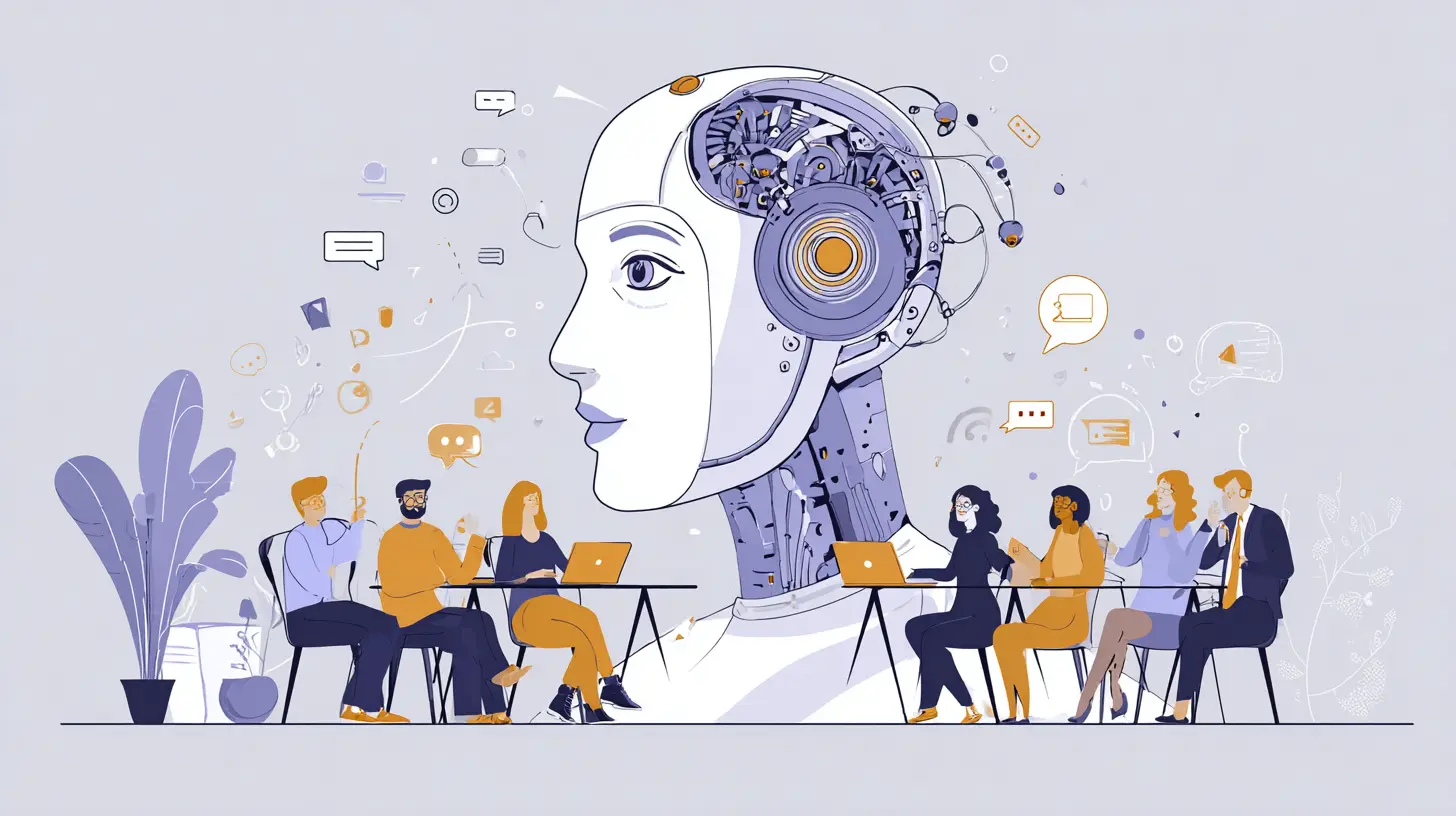
The modern workday is a graveyard of dead time, and most of that time is buried in meetings. We have all sat through the forty-fifth minute of a sixty-minute status update, silently calculating the cost of the collective hourly rates in the room while one person reads bullet points off a slide. The promise of generative AI in the workplace is not about writing better emails or generating code. It is about taking back the calendar. Specifically, it is about handing the reins of the virtual meeting itself to an AI that can plan, facilitate, summarize, and follow up without you having to lift a finger. This is not a distant science fiction scenario. It is the next logical step in the evolution of collaboration software, and it is happening now.

The Shift from Passive Transcription to Active Facilitation
For the past few years, we have grown accustomed to AI that listens. Tools like Otter.ai, Microsoft Teams, and Zoom have offered automated transcription and, more recently, AI-generated summaries. But there is a fundamental difference between a tool that records what happened and a tool that makes what happened worthwhile. Generative AI is moving from the role of a passive stenographer to that of an active conductor.The old model was reactive. You had the meeting, the AI transcribed it, and then you read the summary afterward. The new model is proactive. The AI is in the room before you arrive. It has read the previous meeting's notes, scanned the relevant project documents, and analyzed the emotional tone of the last three exchanges between the key stakeholders. When you join the call, it does not just say "hello." It says, "Welcome back. Based on the last session, we have three unresolved action items. I have structured today's agenda to address these first. Shall we proceed?"
This is the core difference. A transcription tool captures the past. A generative AI facilitator shapes the future. It does this by managing three distinct phases of the meeting lifecycle: the pre-meeting, the live session, and the post-meeting. Understanding how it operates in each phase is the key to actually using it effectively rather than just being a passive observer.
The Pre-Meeting: The AI as a Strategic Scheduler
The first thing generative AI will take over is the death of the back-and-forth scheduling email. But it goes much deeper than just finding a time slot. The AI will act as a gatekeeper for your attention.Imagine you are a product manager. You receive a meeting invite for a "quick sync" with engineering. Before you even accept, the AI has already analyzed the invite. It checks the attendee list. It looks at the project timeline. It recognizes that the engineering lead has a major deployment scheduled for the same afternoon. The AI flags this to you: "This meeting may be redundant. The engineering lead's status is already available in the project dashboard. Alternatively, I can propose a 15-minute async voice memo exchange instead of a live call."
This is the first major value proposition: the AI does not just schedule the meeting; it questions the need for the meeting. In professional practice, the most effective meetings are the ones that never happen. A well-trained generative AI will be your first line of defense against calendar bloat. It will evaluate the cost of the meeting against the availability of the information. If the information can be shared via a document, it will suggest that. If a decision needs to be made, it will pull the relevant data into a pre-read document and attach it to the invite.
the AI will create a dynamic agenda. It will not be a static list of topics. It will be a living document that adapts based on the participants' recent activity. If Sarah from marketing has not updated the campaign tracker in two days, the AI will flag that as a risk item for the meeting. If John from legal has just uploaded a new contract template, the AI will add a brief discussion point about it. The agenda is no longer a formality; it is a curated briefing packet that ensures every minute of the meeting has a purpose.

The Live Session: Managing the Flow and the Friction
This is where the technology becomes truly transformative. During the live call, the generative AI acts as a co-host. But unlike a human host, it has perfect attention and infinite patience. It is not looking at its phone or thinking about its next question. It is watching everything.Real-Time Summarization and Context Injection
One of the most powerful features is the ability to inject context in real time. Suppose a participant mentions a metric from a report that was published last quarter. The AI, having ingested that report, will instantly pop a small card on the screen with the exact figure and the source document. It does not interrupt the speaker. It simply provides a visual aide-memoire for everyone else. This eliminates the awkward silence that follows the question, "Wait, was that 20% or 25%?"This also works for technical jargon. If a developer uses an acronym that the non-technical stakeholders do not understand, the AI can generate a plain-language explanation in the chat sidebar. It does not slow down the conversation; it enriches it. This is a massive advantage in cross-functional teams where the gap between technical and business language is often the root cause of project delays.
Handling the Dominant Speaker and the Silent Observer
A common problem in virtual meetings is the imbalance of voices. One person talks too much, and another person never speaks. A human facilitator often struggles to manage this without creating awkwardness. The generative AI can handle this with data-driven diplomacy.The AI tracks speaking time per participant. If one person has dominated 70% of the conversation for the first ten minutes, the AI can send a private prompt to the facilitator: "Consider opening the floor to the other attendees." More importantly, it can analyze the non-verbal cues of the silent participants. If it detects that a specific individual has been unmuted but has not spoken, it can gently nudge the conversation with a question directed at them: "David, you have been quiet on this topic. Do you have any concerns from the operations side?"
This is not just about fairness. It is about capturing value. The quiet person often holds the key insight that no one else has considered. The AI ensures that their perspective is solicited without putting them on the spot in a way that feels aggressive. It does this by phrasing the question in a neutral, topic-based manner rather than a personal one.
Managing the Clock with Surgical Precision
We have all been in meetings that run over time because the first topic took too long. The generative AI acts as a time-boxing enforcer. It tracks the agenda in real time. If the team is spending 15 minutes on a topic that was allocated 5 minutes, the AI will not just let it slide. It will intervene.It might say, "We are currently 10 minutes over on the budget discussion. We have two options: we can table this for a follow-up, or we can vote on a preliminary direction now and refine it later." This forces a decision. It prevents the common failure mode where the team spends 50 minutes on the first point and then rushes through the remaining five points in a chaotic blur. The AI is not rigid; it is adaptive. It offers choices, and it makes the cost of each choice visible. This is a level of facilitation that most human managers simply do not have the courage or the awareness to execute.
Detecting Conflict and Emotional Temperature
Generative AI models are now sophisticated enough to understand sentiment, not just words. They can detect when a conversation is turning from constructive debate into personal conflict. The AI monitors the tone of the language used. If phrases become more aggressive, or if the pace of interruptions increases, the AI can flag this.It might send a private alert to the meeting host: "Tension is rising between the design and engineering leads. Consider a short break or a reframing of the discussion." In a more advanced implementation, the AI might directly reframe the conversation in real time. It could say, "I am hearing two strong viewpoints here. Let me summarize the core disagreement so we can address it objectively." By depersonalizing the conflict, the AI reduces the emotional temperature and allows the team to focus on the problem rather than the personalities.

The Post-Meeting: The End of the Action Item Hunt
The meeting ends. The participants log off. This is where the old tools stopped working, and where the new generative AI shines brightest. The post-meeting output is no longer a summary. It is a set of executable tasks.The Automatic Action Item Extraction
The AI will parse the entire conversation and extract potential action items. But it does not just list them. It assigns ownership based on who actually agreed to do the work. If Sarah said, "I will send the revised figures by Thursday," the AI creates a task for Sarah with a due date of Thursday. It does not ask her to confirm. It assumes the commitment was made and sets the task.This is a critical feature because it eliminates the "who was supposed to do what" problem. The AI does not rely on memory. It relies on the transcript. It also identifies dependencies. If Task A is a prerequisite for Task B, the AI will flag that. It will create a mini project plan out of the meeting transcript.
The Follow-Up as a Non-Negotiable
The most significant value is in the follow-up. The AI will not just send a summary email. It will create a follow-up schedule. If a task is due on Thursday, the AI will send a reminder on Wednesday. If the task is not completed by Thursday, the AI will escalate it to the project manager.But it goes further. The AI will check the status of the deliverables. If Sarah has not sent the figures, the AI might draft a follow-up email for the project manager to review, or it might ping Sarah directly in the chat: "I noticed the figures are not in the shared drive yet. Is there a blocker?" This creates a closed-loop system where nothing falls through the cracks. The meeting is no longer an isolated event; it is part of a continuous workflow that the AI manages.
The Synthesis of Multiple Meetings
The most advanced use case is the synthesis of multiple meetings over time. The AI will not treat each meeting as a standalone event. It will track the progression of a project across dozens of meetings. It will notice if the team has been discussing the same issue for three weeks without resolution. It will flag this as a "stalled decision" and recommend a different approach, such as a smaller working group or a formal decision matrix.This longitudinal analysis is what separates a generative AI facilitator from a simple transcription tool. It provides the kind of institutional memory that is lost when a key team member leaves the company. The AI becomes the historian of the project, capable of answering questions like, "Why did we decide to use this vendor?" with a precise citation from a meeting three months ago.
The Trade-Offs and the Risks You Must Consider
It would be naive to assume this technology is without cost. There are significant trade-offs and risks that professionals must consider before handing over the meeting controls.The Loss of Serendipity and Informal Trust
The first risk is the loss of the "water cooler" effect. Virtual meetings, for all their inefficiencies, are a place where trust is built. The small talk at the beginning, the jokes, the side conversations in the chat - these are the glue of organizational culture. A generative AI that is too aggressive in enforcing the agenda could strip the humanity out of the interaction.If the AI immediately cuts off the "how was your weekend" chatter, it will save time but lose morale. The best implementations of this technology will not eliminate the informal moments. They will allocate time for them. The AI should be programmed to recognize that the first two minutes of a meeting are for social bonding and should not be interrupted. This is a nuance that requires careful configuration. If you set the AI to be too rigid, you will end up with a team that communicates efficiently but hates each other.
The Danger of the "Algorithmic Echo Chamber"
Another risk is the reinforcement of bias. The AI is trained on historical data. If the company has a history of ignoring the input of a particular department, the AI might learn to deprioritize their contributions. If the AI detects that a certain individual's tasks are always marked as low priority, it might start to treat their action items with less urgency.This is a serious ethical concern. The AI must be monitored for fairness. This is not just about the software; it is about the data it is trained on. You must audit the AI's facilitation patterns to ensure it is not systematically silencing certain voices. This requires a human oversight role, at least in the initial stages. You cannot just "set it and forget it."
The Over-Reliance on Digital Cues
The AI relies on digital signals. It can read your tone of voice and your typing speed, but it cannot read the room in the same way a human can. It does not know if the silence on the call is a productive thinking pause or a sign of disengagement. It does not know if the person who is talking is actually enthusiastic or just nervous.This means the AI's interventions can sometimes be tone-deaf. It might interrupt a moment of deep thought to remind the team of the time. It might ask a question to a person who is actually multitasking and not paying attention, embarrassing them. The AI is a tool, not a mind reader. You must treat its suggestions as suggestions, not as commands. The human facilitator still has the final say.
Best Practices for Implementing AI-Led Meetings
If you are planning to integrate this into your organization, there are several best practices to follow to avoid the common pitfalls.Start with Low-Stakes Meetings
Do not let the AI lead your quarterly board review in week one. Start with internal status meetings, brainstorming sessions, or daily stand-ups. These are low-stakes environments where the AI can make mistakes without causing major damage. Use these sessions to calibrate the AI's aggressiveness. Does it interrupt too much? Is it asking the right questions? You need to build a feedback loop where participants can rate the AI's facilitation quality.Define the AI's Personality and Boundaries
The AI needs a clear set of rules. You must define what it is allowed to do and what it is not. Is it allowed to directly ask a participant a question, or must it only suggest questions to the human host? Is it allowed to table a topic, or does that require human approval? These boundaries are crucial. An AI that is given too much autonomy can quickly become a dictator. An AI that is given too little is just a fancy timer.Keep the Human in the Loop for Sensitive Conversations
For performance reviews, salary negotiations, or any discussion involving personal conflict, the AI should be in "observation mode" only. It should not intervene. It should not summarize the emotional state of the participants. It should simply record and transcribe. The risk of misinterpretation is too high in these contexts. A human facilitator is essential for these conversations, and the AI should be relegated to the background.Invest in the Quality of the Input Data
The AI is only as good as the data it has access to. If your project management tools are outdated, if your documents are not tagged, if your email is a mess, the AI will not be able to provide useful context. Before you implement an AI facilitator, you need to clean up your digital workspace. This is not a technical challenge; it is an organizational discipline challenge. The AI will expose every flaw in your documentation process.The Misconception: It Is Not About Replacing the Human
A common fear is that this technology will replace the meeting facilitator or the project manager. This is a misconception. The AI is not replacing the human role; it is elevating it. The human facilitator is freed from the mundane tasks of note-taking, timekeeping, and tracking action items. They are now free to do what humans do best: read the room, build relationships, make judgment calls, and provide empathy.The AI handles the "what" and the "when." The human handles the "why" and the "how." The best meeting of the future will be a partnership. The AI will say, "We are off track on time." The human will say, "Let us take a five-minute break because I sense we are hitting a creative wall." The AI provides the data, and the human provides the wisdom.
The Future Outlook: The Asynchronous Meeting
Looking further ahead, the generative AI will enable the rise of the entirely asynchronous meeting. This is where participants do not need to be online at the same time. The AI will present the agenda to each participant in their own time zone. It will record their video responses, their comments, and their decisions. It will then synthesize all of these inputs into a coherent "meeting outcome."This is a radical departure from the current model. It means that the "meeting" is no longer a real-time event. It is a process that unfolds over a period of days. The AI manages the workflow, prompts the participants for their input, and resolves conflicts between different opinions. This is the ultimate solution to the global, distributed team problem. Nobody has to wake up at 3 AM for a call. The AI handles the logistics, and the human handles the thinking.
This is not without its challenges. The loss of real-time interaction can reduce the spontaneity of brainstorming. But for decision-making and status updates, it is vastly more efficient. The AI will be able to detect if a decision is being blocked by a lack of information and will proactively request that information from the relevant party.
Conclusion: A Call to Action for the Modern Professional
The era of the passive virtual meeting is ending. The technology is here to take over the heavy lifting. The question is not whether you will use a generative AI facilitator, but how quickly you will adapt to it. The professionals who thrive in the next decade will not be those who are the best at talking in meetings. They will be those who are the best at setting up the AI to run the meeting for them so they can focus on the actual work.This is a shift in mindset. You must be willing to trust the machine to handle the logistics. You must be willing to let go of the control of the conversation flow. You must be willing to let the AI ask the tough questions that you are too polite to ask. If you do this, you will find that your meetings become shorter, your decisions become faster, and your team's energy is spent on solving problems rather than on administrative overhead. The future of work is not about working more hours. It is about working with better tools. The generative AI meeting facilitator is the most powerful tool to hit the workplace since the spreadsheet. It is time to hand over the remote control.
all images in this post were generated using AI tools
Category:
Virtual MeetingsAuthor:

Pierre McCord