How Quantum Computing is Gaining Attention at Major Tech Expos
28 March 2026
If you've attended a tech expo recently or even just followed one online, you've probably noticed a buzzword that keeps popping up more and more: quantum computing. Once the stuff of science fiction, it's now stealing the spotlight at major tech events around the world. But what’s really going on? Is this just another passing phase, or is there something deeper brewing in the quantum realm?
Well, buckle up. We're diving into how quantum computing is turning heads, sparking conversations, and shaping the future — one qubit at a time.
What is Quantum Computing, Anyway?
Before we get into why it’s the darling of tech expos, let’s break it down.Imagine your classical computer as a very fast, very efficient librarian. It’s great at finding and organizing books (aka data), but it can only read one page at a time. Now, quantum computers? They're like a team of genius librarians who can read every page of every book simultaneously before choosing the exact info you need. Wild, right?
Quantum computing relies on quantum bits (qubits), which can exist in multiple states at once — not just 0 or 1 like standard bits. Thanks to quantum properties like superposition and entanglement, these machines can handle complex problems that would take today’s fastest supercomputers millennia to solve.
Why The Sudden Spotlight on Quantum Computing?
So, why is everyone talking about it now?The short answer: because we’re finally seeing real progress.
For years, quantum computing felt like a pipe dream — you’d hear about it in research papers and theoretical physics classes, but not in practical tech discussions. That’s changed. Major players like IBM, Google, Intel, and startups like Rigetti and IonQ are pushing actual boundaries now. They're building tangible hardware, achieving breakthroughs, and — more importantly — demonstrating prototypes that work.
These developments are making their way into conferences and expos, and people are paying attention.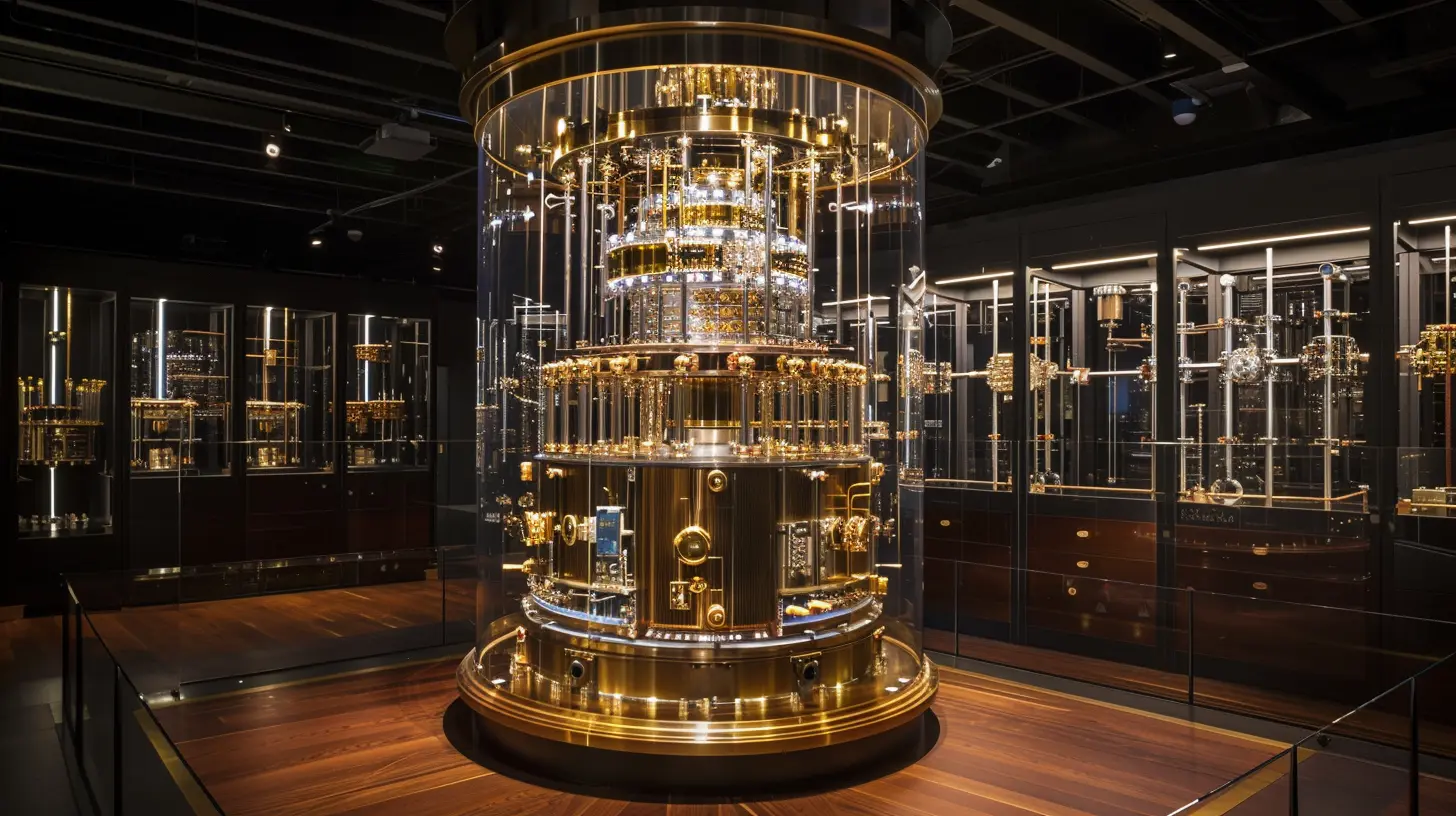
A New Star on the Expo Stage
From Side-Booth Curiosity to Mainstage Buzz
Back in the day, quantum booths at expos were little more than tiny corners with flashy posters and academic jargon. Fast forward to now, and they’re front and center, sharing the stage with AI, robotics, and Web3.Take CES (Consumer Electronics Show), for example — one of the biggest tech expos in the world. In recent years, companies like IBM have demoed their quantum roadmaps, showing how they plan to scale their systems. Quantum sessions are packed. And it’s not just hardcore scientists attending — developers, investors, and curious tech enthusiasts are all in.
Same goes for events like Web Summit, TechCrunch Disrupt, and even SXSW. The narrative is shifting: quantum is no longer “maybe someday.” It’s “what’s next?”
Big Tech is Betting Big
You can’t talk quantum without mentioning the big guns.IBM
IBM has been playing the long game in quantum computing. At events like CES and IBM Think, they consistently showcase their latest quantum hardware and cloud-based quantum computing services. Their Qiskit open-source framework is helping developers dip their toes into this new world.In 2023, IBM unveiled their roadmap for over 1,000-qubit systems and even set eyes on modular quantum systems — a game-changer for scalability.
At expos, Google’s demos focus on their Sycamore processor and quantum AI research. They’re not just chasing speed; they’re exploring how quantum can fuel new discoveries in materials, chemistry, and machine learning.
Intel & Microsoft
Intel is working on silicon-based qubits, hoping to leverage existing manufacturing infrastructure to scale faster. Microsoft’s Azure Quantum platform, meanwhile, is emphasizing accessibility — making quantum computing available to developers through cloud services.These companies aren’t just showing up to expos for PR. They’re laying groundwork, building partnerships, and hiring quantum developers like there’s no tomorrow.
Startups Stealing the Show
Sure, the tech giants are impressive. But let’s not ignore the dizzying pace at which quantum startups are innovating.IonQ
They’ve carved a name for themselves by building trapped ion quantum computers, which are incredibly stable and accurate. At conferences like TechCrunch Disrupt, IonQ often surprises attendees with how polished and practical their systems are becoming. They even went public via SPAC, signaling major investor interest.Rigetti Computing
This Berkeley-based company is pioneering hybrid quantum-classical computing. At expos, their booths aren't just about showing off machines – they’re actively letting developers run real quantum algorithms on their systems. Try doing that at a regular GPU booth!Xanadu
Based in Canada, Xanadu is all about photonic quantum computing. Instead of electrons, they use light — literally photons — to process data. They made a splash at various AI and quantum expos with their software platform, PennyLane, which blends quantum computing and machine learning.These startups bring scrappy innovation and hands-on energy to the stage, often outshining bigger players when it comes to passion and access.
Live Demos Are Turning Heads
Remember how cool it was the first time you used VR at an expo? That’s the vibe around live quantum demos today.Thanks to cloud platforms, visitors can now run basic quantum programs on real quantum hardware right from a laptop or even a phone during a demo. And you don’t need a PhD in physics — just a bit of Python and curiosity.
This shift from “look at our lab” to “try it yourself” is making quantum computing real for hundreds of thousands of developers and students.
Quantum and AI: The Perfect Tag Team?
One of the hottest topics at expos is the intersection of quantum computing and artificial intelligence.Imagine training huge neural networks in seconds or cracking optimization problems that would baffle today’s AI. That’s the dream — and the community is actively researching how quantum algorithms can amplify AI models.
Companies like Zapata Computing, Cambridge Quantum, and even Amazon Braket are showcasing quantum-enhanced machine learning models at tech expos, stirring lots of "oohs" and "aahs."
Sure, we’re not there yet. But it’s closer than you think.
Challenges? Oh, Plenty
Let’s not sugarcoat it — quantum computing has a long way to go.Errors, noise, stability, and decoherence are still major obstacles. Most quantum systems today are NISQ devices (Noisy Intermediate-Scale Quantum), which means they’re not perfect or scalable yet.
But here’s the thing: knowing that there are challenges doesn’t dull the excitement — it fuels it. Every breakthrough, even a small one, gets celebrated like a moon landing at tech expos. Because in this space, every inch gained is a giant leap for techkind.
The FOMO Factor
Tech expos are a hotspot for FOMO (fear of missing out), and quantum computing is adding fuel to that fire.Venture capitalists are flocking to quantum booths, universities are building quantum centers, and governments are rolling out billions in funding for quantum research.
If you’re a developer, entrepreneur, or tech enthusiast, ignoring quantum right now almost feels like ignoring the internet in the 90s. You don’t need to be building a quantum processor yourself — but understanding the basics and watching the space could open up some massive opportunities.
So, What’s Next?
Quantum computing isn’t just a shiny trend. It’s a deep, powerful shift in how we think about computation. And tech expos? They’re the perfect magnifying glass for highlighting that shift.As technology continues to evolve, we’ll see more real-world applications, more user-friendly tools, and more crossovers with other tech fields like cybersecurity, pharmaceuticals, and climate modeling.
The hype is real — but so is the progress.
Final Thoughts: Should You Care?
Absolutely.You don’t need to be a quantum physicist to care about quantum computing. If you’re into technology at all — whether you build apps, run a startup, manage infrastructure, or just love gadgets — quantum computing is going to touch your world in some way.
So the next time you're at a tech expo, don’t just walk past the quantum booth. Ask questions. Try a demo. Who knows? It might just change how you think about what's possible.
all images in this post were generated using AI tools
Category:
Tech EventsAuthor:

Pierre McCord
Discussion
rate this article
2 comments
Ardyn Cole
Quantum computing's rise at major tech expos highlights its transformative potential across industries. As leading companies showcase advancements, the technology's ability to solve complex problems faster than classical computers captures both interest and investment, signaling a pivotal shift in computing paradigms.
April 5, 2026 at 5:00 PM
Pierre McCord
You're right. The excitement around quantum computing at these expos truly reflects its potential to change the game across various fields. It's a thrilling time for tech innovation.
Simon McVicker
Great insights on the growing interest in quantum computing at tech expos! It’s fascinating to see how industry leaders are exploring its potential. I’m curious about the practical applications that may emerge from these discussions—any predictions on which sectors might benefit first?
March 28, 2026 at 3:57 PM
Pierre McCord
Thanks for the comment! I believe sectors like finance, pharmaceuticals, and logistics will see early benefits from quantum computing applications. It will be exciting to watch these developments unfold.