The Ethics of Predictive Policing in a Surveillance Society
23 July 2026
Predictive policing sits at the intersection of big data, public safety, and civil liberties. It promises to stop crime before it happens, but it also threatens to encode bias into the very fabric of law enforcement. As a technologist who has worked on risk assessment systems and data ethics panels, I have seen both the potential and the peril. The core question is not whether the technology works, but whether we can trust ourselves to use it wisely.
The Mechanics of Prediction
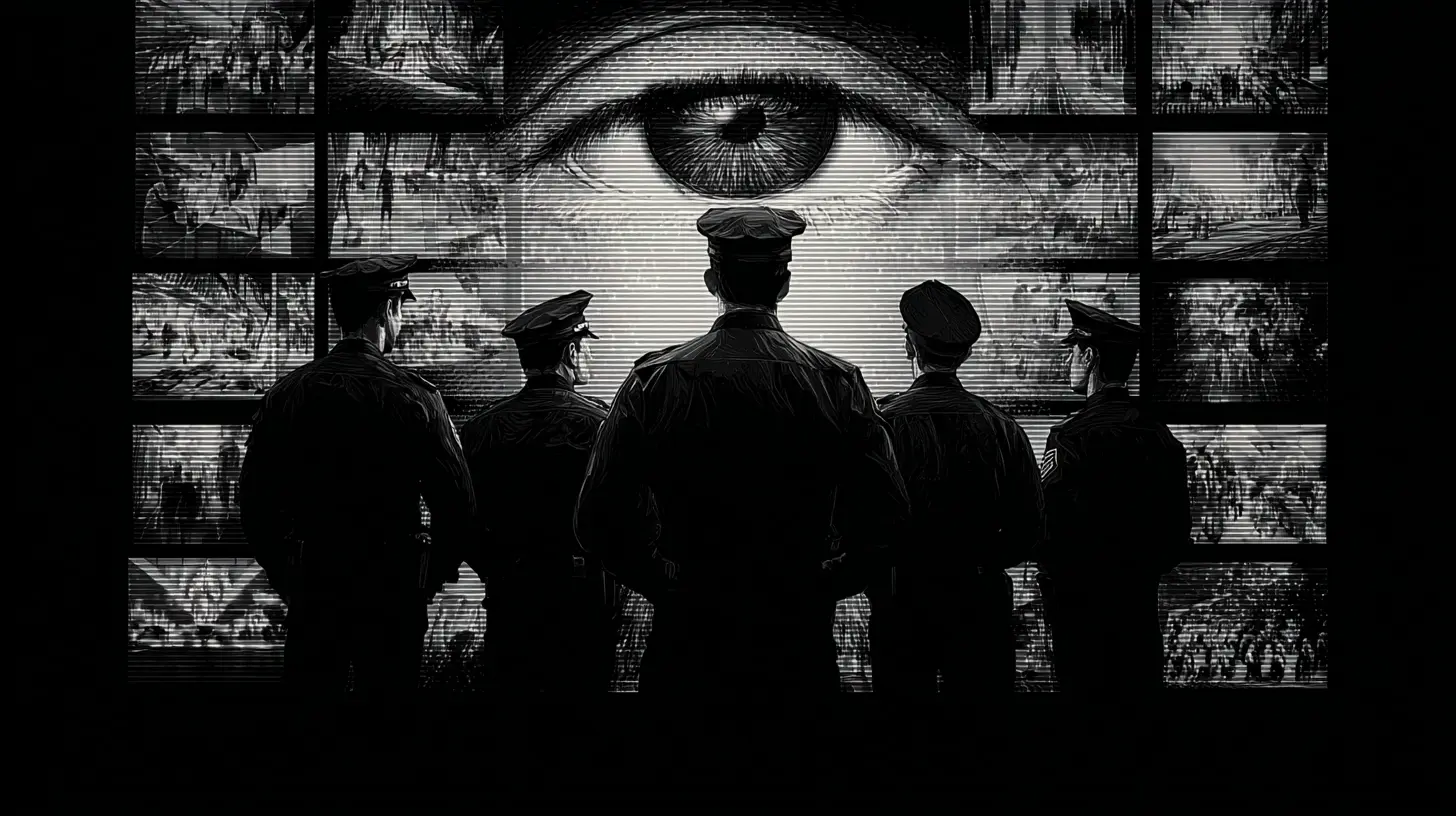
Most people imagine predictive policing as something out of science fiction, a system that identifies individual criminals before they act. The reality is far more mundane and far more dangerous. The most common systems are place-based. They analyze historical crime data to identify hot spots where crime is statistically likely to occur. The software uses algorithms like regression analysis, clustering, and sometimes machine learning to predict where and when property crimes like burglary or auto theft might spike. Person-based systems exist too, but they are less common and far more controversial. These attempt to identify individuals who are statistically likely to be victims or perpetrators of violence, often using social network analysis and past arrest records.The fundamental mechanism is pattern recognition. The system finds correlations in historical data and projects them forward. If a neighborhood saw a spike in break-ins during December last year, the algorithm predicts a similar spike this December. This sounds reasonable, but it assumes the past perfectly predicts the future, and it assumes the data is clean. Both assumptions are false.
The Data Problem Nobody Wants to Admit
The single biggest misconception about predictive policing is that the data is objective. Crime data is not a neutral measurement of reality. It is a record of police activity. If a police department patrols a low-income neighborhood more aggressively, they will find more crime there. That data then feeds back into the prediction system, which tells them to patrol that neighborhood even more. This creates a feedback loop that inflates crime statistics in already over-policed communities while ignoring crime in areas with less police presence.Consider a real example from a major city that deployed a predictive system. The algorithm flagged a few blocks as high risk for drug crimes. Officers increased patrols there and made more arrests. The next month, the algorithm saw the new arrest data and expanded the hot zone. Within a year, that small area accounted for a disproportionate share of all drug arrests in the district. Was there actually more drug dealing there? Or was the system simply finding what it was looking for? The answer matters because those arrests destroyed lives, separated families, and deepened community distrust of police.
This is not a bug. It is a feature of how the system learns. The algorithm has no understanding of fairness or context. It only knows that certain patterns of past arrests predict future arrests. If the past arrests were biased, the future predictions will be biased too. Garbage in, garbage out, but with handcuffs.
The Transparency Paradox
Developers of predictive policing systems often claim the algorithms are proprietary. They argue that revealing the code would allow criminals to game the system. This argument is weak on its face. Criminals already know where they commit crimes. They are not consulting the algorithm to decide where to break in. The real reason for secrecy is competitive advantage. Companies want to protect their intellectual property.The problem is that opacity kills accountability. If a system flags a particular block as a hot spot, and that block happens to be predominantly Black or Hispanic, how do we know if the prediction is accurate or biased? We cannot audit the algorithm. We cannot challenge its assumptions. We cannot even verify that it works as advertised. This is unacceptable for a tool that directs police power.
Several cities have tried to demand transparency only to be met with legal pushback. The result is that police departments are deploying systems they do not fully understand, based on data they did not collect, using algorithms they cannot inspect. This is not policing. It is gambling with public trust.
The Chilling Effect on Communities
Predictive policing does not just affect the people it targets. It affects everyone who lives in a surveillance society. When people know that police are using data to predict crime, they change their behavior. They avoid certain areas. They stop calling the police for help. They become less willing to cooperate with investigations.I have spoken with community organizers in cities where predictive systems were deployed. They described a climate of fear, not of crime, but of the police. People worried that being seen in a hot spot would put them on a list. They worried that their phone location data would be used against them. They worried that their children would be targeted because of where they lived.
This is the hidden cost of predictive policing. It erodes the social trust that makes communities safe. Strong neighborhoods are built on relationships between residents and police. When those relationships become adversarial, crime often goes up, not down. The algorithm cannot measure trust, so it never accounts for this damage.
The False Promise of Objectivity
Proponents of predictive policing often argue that algorithms are more objective than human officers. They point to studies showing that human discretion is influenced by race, class, and personal bias. This is true. Humans are biased. But algorithms inherit the biases of their creators and their data. They do not eliminate bias. They hide it behind a veneer of mathematical authority.The real danger is that algorithmic predictions feel scientific. When a computer says a neighborhood is high risk, it carries more weight than a human officer's hunch. This leads to what researchers call "automation bias." Officers trust the system too much and override their own judgment. They follow the prediction even when it does not match what they see on the ground.
I have seen this firsthand. An officer told me that his department's system flagged a park as a hot spot for gang activity. He had patrolled that park for years and knew it was just kids playing basketball. But because the system said so, the department assigned extra patrols. The kids got harassed. Parents complained. The real gang activity was happening three blocks away in an area the system never flagged because no one had been arrested there yet.
When Predictive Policing Works
I do not want to give the impression that predictive policing is always bad. There are legitimate use cases where it can improve outcomes. The key is to use it as a tool for resource allocation, not for targeting individuals.The most ethical applications focus on property crime in areas where the data is relatively clean. For example, a department might use historical data to predict when and where car break-ins are likely to occur. They can then increase patrols or set up bait cars. This is not profiling. It is simply allocating resources based on patterns.
Another reasonable use is for predicting demand for emergency services. If the data shows that domestic violence calls spike on holiday weekends, a department can ensure they have enough officers and social workers on duty. This is about preparation, not prediction of specific crimes.
The line between ethical and unethical use is clear. If the system tells you where to deploy resources, it might be okay. If it tells you who to stop or who to suspect, it is almost certainly not okay.
The Legal Landscape
The legal framework for predictive policing is still developing. The Fourth Amendment protects against unreasonable searches and seizures, but it does not clearly address algorithmic predictions. Courts have generally allowed police to use data to establish reasonable suspicion, but the standard is murky.Some cities have passed laws requiring transparency and oversight. For example, a few jurisdictions now require that predictive systems be audited annually for racial bias. Others have banned the use of predictive policing entirely. These are positive steps, but they are piecemeal.
The real legal challenge is that predictive policing often operates in a gray area. It is not technically an arrest or a search. It is a recommendation to an officer. That officer still has discretion. So the system can influence behavior without triggering traditional legal protections. This is why oversight is so important. The law alone cannot solve this problem.
The Role of Civilian Oversight
Any police department that deploys predictive policing should have a civilian oversight board with real power. That board should include data scientists, civil rights attorneys, and community representatives. They should have access to the algorithm, the training data, and the output. They should be able to demand changes or shut the system down.This is not a theoretical recommendation. I have seen departments that implemented oversight and departments that did not. The ones with oversight caught problems early. They noticed when the algorithm started over-flagging certain neighborhoods. They corrected the data inputs. They retrained the models. The ones without oversight just kept doubling down on bad predictions until the community revolted.
The cost of oversight is minimal compared to the cost of a scandal. A single biased algorithm can destroy years of community policing work. It can lead to lawsuits that cost millions. It can erode public trust for a generation. A small investment in oversight is cheap insurance.
Alternatives to Predictive Policing
Before a department adopts predictive policing, it should consider alternatives that achieve the same goals with less risk.Community policing is the most obvious alternative. It involves officers building relationships with residents, attending community meetings, and working with local organizations. This approach is slower and less glamorous than algorithmic prediction, but it produces more sustainable results. It builds trust instead of eroding it.
Another alternative is problem-oriented policing. Instead of predicting where crime will happen, officers analyze the underlying causes of crime in specific locations. They work with other city agencies to fix broken streetlights, clear abandoned lots, and connect people with social services. This addresses root causes rather than symptoms.
Data analysis can still play a role here. The difference is that the data is used to understand problems, not to predict crime. A department might analyze which street corners have the most accidents and then redesign the intersection. That is a legitimate use of data. It does not involve targeting individuals based on statistical profiles.
The Human Cost of False Positives
Every prediction system has false positives. In predictive policing, a false positive means someone is stopped, questioned, or surveilled who should not have been. The cost of these errors is not evenly distributed. They fall disproportionately on people of color and low-income communities.A false positive in a wealthy suburb might mean a brief inconvenience. A false positive in a high-crime neighborhood might mean a violent confrontation, an arrest record, or worse. The algorithm does not distinguish between these contexts. It just outputs a probability.
This is the fundamental ethical failure of predictive policing. It treats people as data points. It ignores the human consequences of its errors. And because the errors are built into the system, they will never be eliminated. The only way to avoid false positives is to stop making predictions.
The Future of Surveillance
Predictive policing is part of a larger trend toward surveillance in all aspects of life. License plate readers, facial recognition, social media monitoring, and cell phone tracking are all becoming common. These tools are often sold as crime-fighting measures, but they create a surveillance infrastructure that can be used for many purposes.The danger is that once the infrastructure is in place, it is hard to remove. A police department that installs cameras and license plate readers for predictive policing can easily repurpose them for political surveillance, protest monitoring, or immigration enforcement. The original justification becomes irrelevant.
This is why the debate about predictive policing is really a debate about what kind of society we want to live in. Do we want a society where police have the power to predict and prevent crime before it happens? Or do we want a society where we accept some risk in exchange for freedom from constant surveillance?
There is no perfect answer. But the answer should be chosen deliberately, not by default because the technology was cheaper than hiring more officers.
Practical Recommendations for Decision Makers
If you are a police chief, city council member, or community leader considering predictive policing, here are specific steps you should take.First, demand transparency. Do not sign a contract with any vendor that refuses to share the algorithm, the training data, and the testing results. If the vendor claims the algorithm is secret, walk away. There are other tools.
Second, require an independent audit before deployment. Hire a third-party data scientist to test the system for bias. Do not rely on the vendor's own testing. They have a financial incentive to find no problems.
Third, limit the scope. Do not use predictive policing for person-based predictions. Do not use it for violent crime. Restrict it to property crime and resource allocation. If the system cannot work within those limits, it is not ready for deployment.
Fourth, build in sunset clauses. Require that the system be reauthorized every year based on performance and community feedback. If it is not working, or if it is causing harm, shut it down.
Fifth, invest in community engagement. Before you deploy any new technology, talk to the people who will be affected. Hold public meetings. Listen to concerns. Be willing to change your plans based on what you hear.
Conclusion
Predictive policing is a tool. Like any tool, it can be used well or poorly. The problem is not the technology itself. It is the way we deploy it without adequate safeguards, without transparency, and without regard for the human cost.The ethics of predictive policing come down to a simple question: Who bears the risk? Right now, the risk is borne by the communities who are already most vulnerable. The benefits go to police departments who want to look modern and to vendors who want to sell software.
This is not sustainable. Eventually, the trust will break, and the systems will fail. The only way to make predictive policing ethical is to share the risk, to open the algorithms to scrutiny, and to put the power of oversight in the hands of the people who are most affected.
That is not just good ethics. It is good policing. Because in the end, police cannot protect communities they do not trust, and communities cannot trust police who treat them as data points.
all images in this post were generated using AI tools
Category:
Tech PolicyAuthor:

Pierre McCord