Why Graphics Cards Are Crucial for Machine Learning and AI Development
2 July 2026
Let’s kick this off with a bold truth bomb: without graphics cards (a.k.a. GPUs), machine learning and AI would probably still be crawling at a turtle’s pace, trying to figure out how to detect a cat in a picture. No offense to turtles—they’re adorable. But in the fast-paced world of AI, slow and steady does NOT win the race.
So, if you’ve ever wondered why GPUs are such a big deal in the machine learning universe, you’re in for a byte-sized treat (get it?). We’re gonna break it all down in a way that doesn’t require a Ph.D. in computer science—just a solid appreciation for tech, caffeine, and spectacular analogies.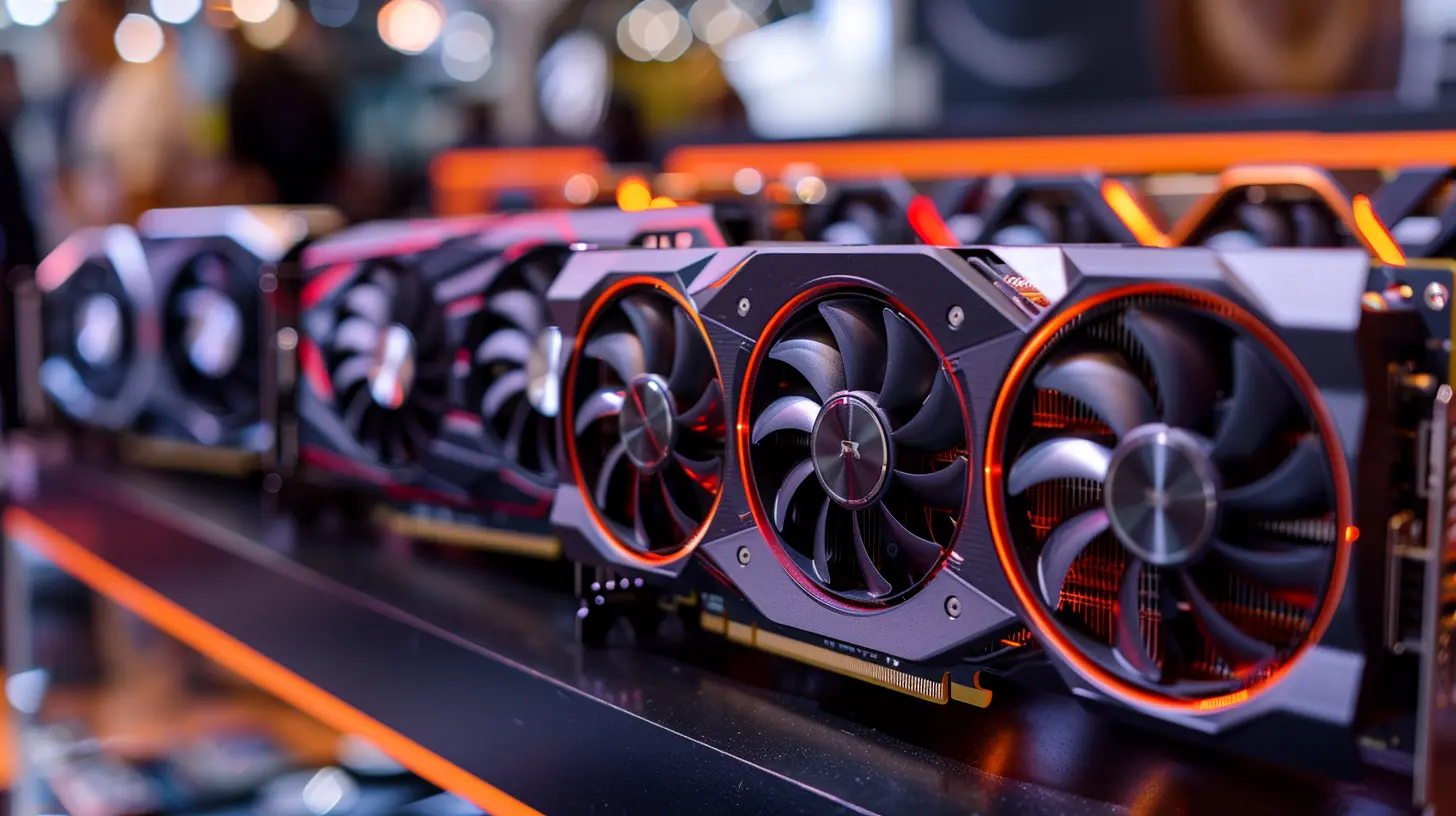
Wait, What Even Is a GPU?
Okay, let’s start with the basics. A GPU, or Graphics Processing Unit, was originally made for gamers who wanted to make their video game explosions look extra explode-y. It’s the chip inside your graphics card that renders images, animations, and videos so smoothly you feel like you’re living inside a Pixar movie.But at some point, a group of genius data scientists thought, “Hey, this thing’s great at doing tons of calculations very quickly. What if we used it for something totally not graphics-related?”
Boom. Machine learning and AI development were forever changed.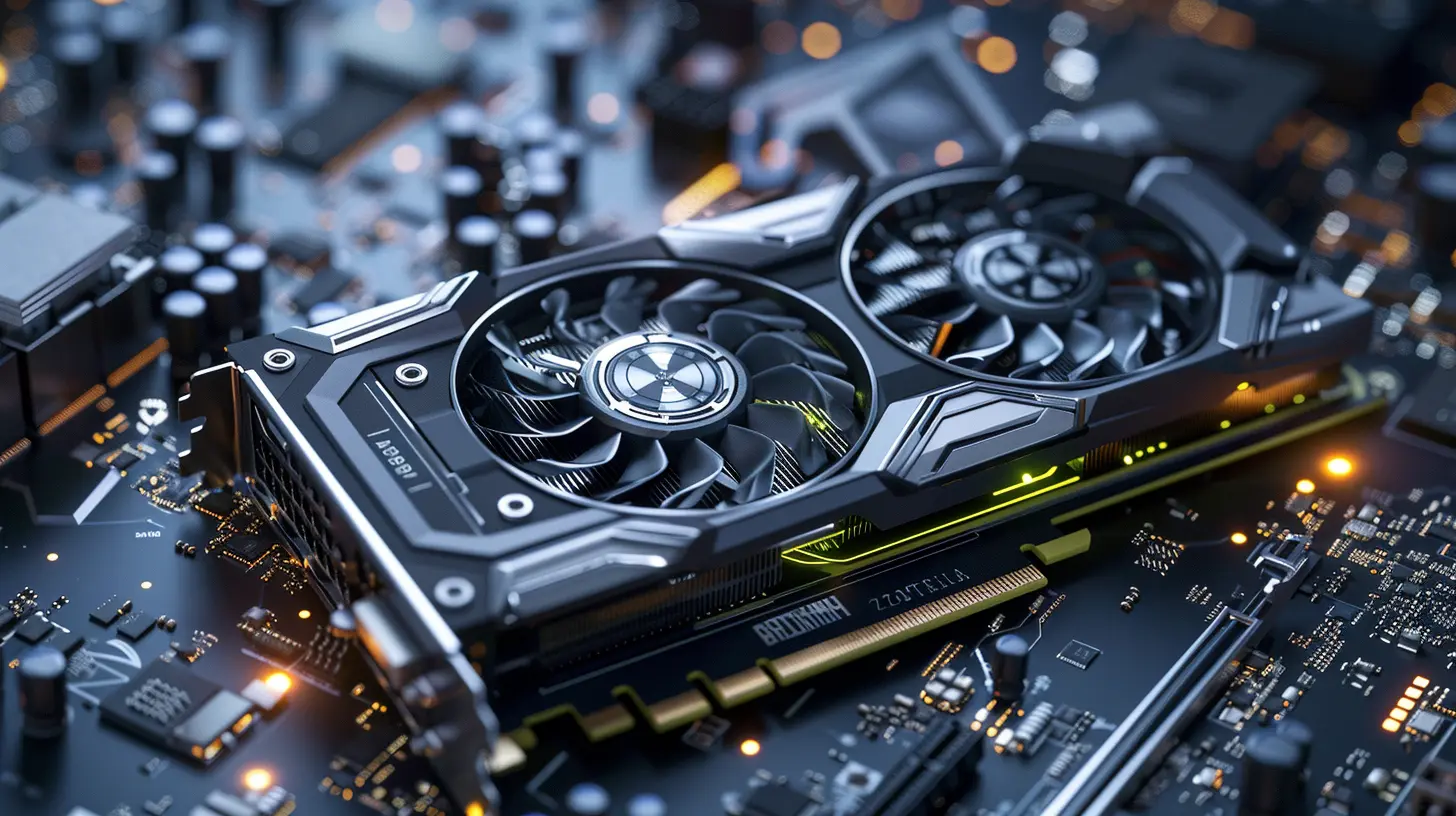
CPU vs GPU: The Battle of the Acronyms ?
You know how a CPU (Central Processing Unit)—your computer's main processor—is like a general-purpose worker? It's great at doing one or two tasks at a time with a lot of brainpower. Reliable, but not exactly Speedy Gonzales when it comes to multitasking.A GPU, on the other hand, is like an over-caffeinated intern army. Sure, each intern might not be brilliant individually, but throw thousands of them at a problem that can be broken into smaller parts, and they'll crush it.
Machine learning problems? They're perfect for this class of intern-like computation. Training a neural network involves performing millions (sometimes billions) of simple mathematical operations. Doing them one by one on a CPU would be like trying to build IKEA furniture with a spoon. Painful. Slow. Regret-inducing. A GPU turns that spoon into a high-powered drill.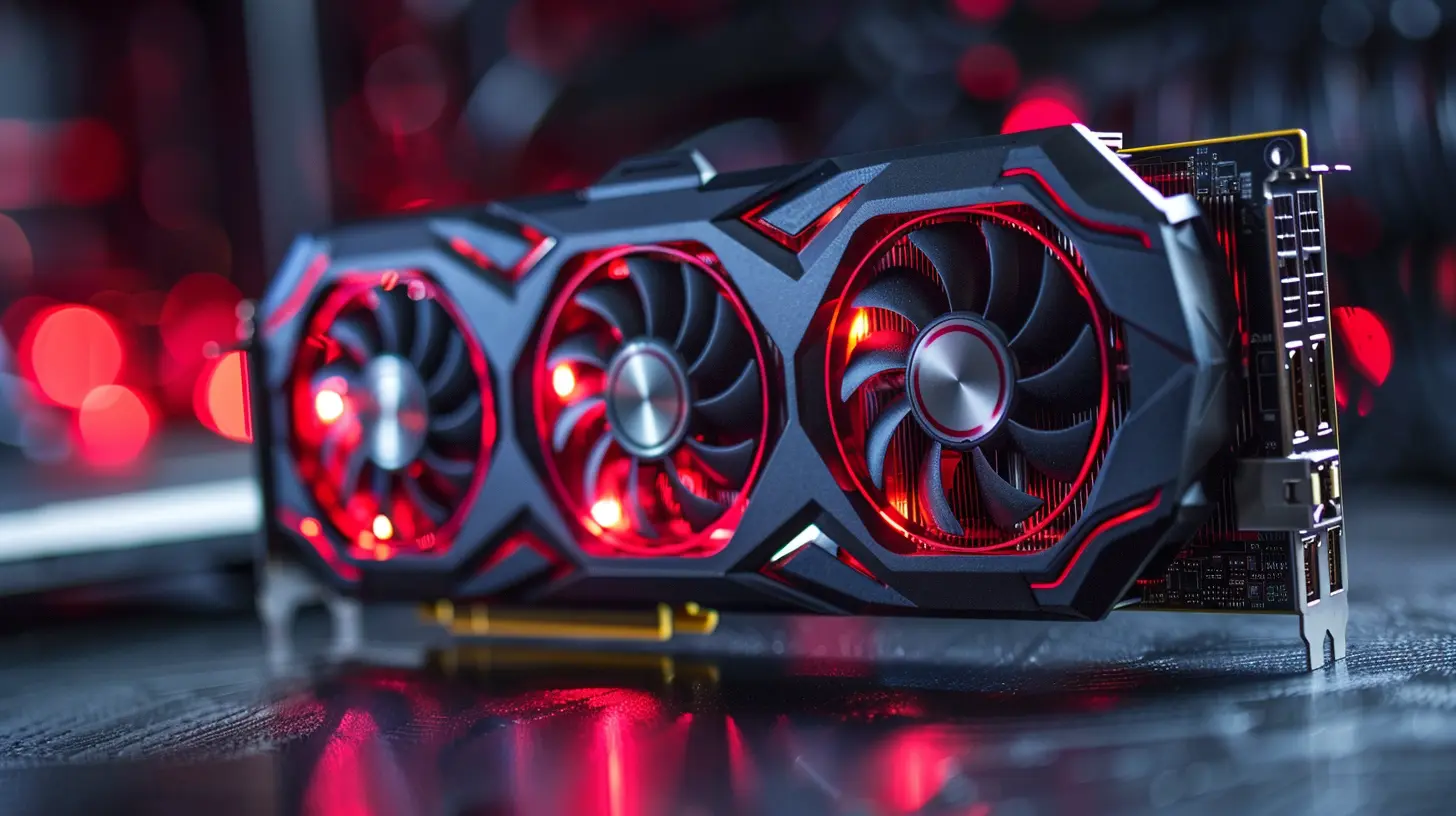
Why Machine Learning Loves GPUs More Than Its Morning Coffee
So why exactly do GPUs make machine learning algorithms purr like a Tesla in Ludicrous Mode? Here’s why.1. Massive Parallelism
GPUs aren’t just fast. They’re really good at doing a mountain of small operations all at the same time. Most modern GPUs have thousands of cores. Compare that to CPUs, which usually have anywhere from 4 to 16 cores (unless you're rich or work at NASA).In deep learning, training a neural network means adjusting weights over and over (and over) again until the model "gets it"—like a toddler learning not to lick electrical sockets. This involves a ton of matrix multiplications and number crunching, which GPUs eat for breakfast.
2. Memory Bandwidth
Think of memory bandwidth like the size of the pipeline that gets data in and out of your processor. GPUs have monster-sized pipes. They can gobble up and spit out data at alarming rates. This means less time waiting for data to process and more time actually doing computations.In layman’s terms? A GPU won’t waste your time like your buddy who says “I’ll be there in five” and shows up an hour later.
3. Optimized Libraries
Let’s not forget the software side. NVIDIA, AMD, and others didn’t stop at just making great hardware. They also built optimized libraries like CUDA and cuDNN. These allow machine learning frameworks like TensorFlow and PyTorch to squeeze every bit of juice out of the GPU.It’s like handing a chef not just a shiny new knife, but also a shortcut recipe that guarantees a perfect soufflé every single time.
Real-Life Application: From Cat Memes to Cancer Detection
Still not convinced? Let’s take a stroll through the real world.Medical Imaging
Training a model to detect tumors in MRI scans? That takes processing huge amounts of image data. Without GPUs, training that model might take months. With GPUs? You're looking at hours or days. And in medicine, time = lives.Self-Driving Cars
These things need to process data from cameras, lidars, sensors—constantly. They need to classify objects, make decisions, and not mistake a stop sign for a yield sign. All in real time. That’s not just fast; that’s GPU-fast.Natural Language Processing (NLP)
You know that magic behind chatbots, speech recognition, and text translation? Yup, that’s more machine learning wizardry—and training those models would be near impossible without GPUs. These models are enormous—some with billions of parameters. Feeding them to a CPU would be like asking your grandpa to binge-watch every Marvel movie—he’d rather just take a nap.But Aren’t GPUs Expensive?
Ah yes—the wallet-aching side of the equation. Graphics cards have been pricier than avocados at Whole Foods lately. Especially during global chip shortages or when crypto-miners go full goblin mode and hoard every last GPU they can get their hands on.But here’s the thing: time is money. And training a model on a CPU takes a lot more time. In the long run, using a GPU saves you from paying the “time tax.” It’s the difference between taking a rickshaw to your destination versus hopping on a jet.
Also, with cloud services like AWS, Google Cloud, or Azure, you can rent high-end GPUs by the hour. No need to sell your kidneys to buy a Titan RTX.
TPU vs GPU: Wait, There’s Another Player?
You bet. Enter TPUs (Tensor Processing Units). These are specialized chips built by Google specifically for deep learning tasks. They’re like the Tesla Roadsters of AI training—super-fast, super-specialized.So why not just use TPUs? Well, they’re fast, but they’re not as flexible as GPUs. Think of GPUs like Swiss Army knives—you can use them for a variety of things (not just ML), while TPUs are more like laser scalpels—amazing for one specific task, not great for multitasking.
Also, TPUs are mostly available through Google's cloud platform. So unless you're all-in with Google, GPUs remain the go-to hardware for most developers.
The Rise of AI-Optimized GPUs
Manufacturers aren’t just sitting around either. NVIDIA, for example, has gone all-in with AI-focused hardware. They’ve brought out the A100, H100, and other powerhouse cards that sound less like tech products and more like Marvel villains.These newer cards are optimized specifically for machine learning and AI workloads. They feature Tensor Cores—specialized units inside the GPU designed for matrix math. Translation: they make deep learning fly like it’s wearing a rocket-powered jetpack.
DIY ML Rig vs Cloud-Based Training
At this point, you might be wondering: Should I build my own Frankenstein-esque machine learning rig with RGB lights just for fun? Or should I stick with the cloud?Both have their pros and cons:
- Building a rig with your own GPU gives you full control and can be cheaper in the long run (especially for experimentation).
- Cloud platforms give you scalability and flexibility. Plus, there’s zero hardware maintenance. Your model crashes? Just restart the instance—not your whole PC.
Either way, the GPU is at the heart of it all. It’s the engine under the hood that makes the AI car go vrooooom.
Wrap-Up: So Why Are GPUs So Crucial?
Alright, let’s land this plane.GPUs are the backbone of modern machine learning and AI development. Without them, training models would take forever, running inference would drag, and real-time applications would be a pipedream. They bring speed, parallelism, and efficiency that CPUs just can’t match.
To put it plainly: GPUs are to AI what the microwave is to frozen pizza. Sure, you could preheat the oven and wait 40 minutes… or you could zap that bad boy and be living your best life in 3 minutes. Which sounds better?
So next time you see a machine learning breakthrough—whether it's a chatbot that flirts with your dog or a robot that folds your laundry—you can bet there’s a powerhouse GPU working its silicon heart out behind the scenes. Give it a silent thank-you. Or maybe name your next houseplant after it. Whatever feels right.
all images in this post were generated using AI tools
Category:
Graphics CardsAuthor:

Pierre McCord
Discussion
rate this article
1 comments
Zevan Campbell
Graphics cards are the brains behind AI. Without them, you're just spinning your wheels...
July 17, 2026 at 2:42 AM
Pierre McCord
You're right. Graphics cards are essential for processing the massive data needed in AI, making them critical for progress in the field.