Marilou Schultz Blends Digital Tech with Traditional Navajo Weaving
June 27, 2026 - 21:08
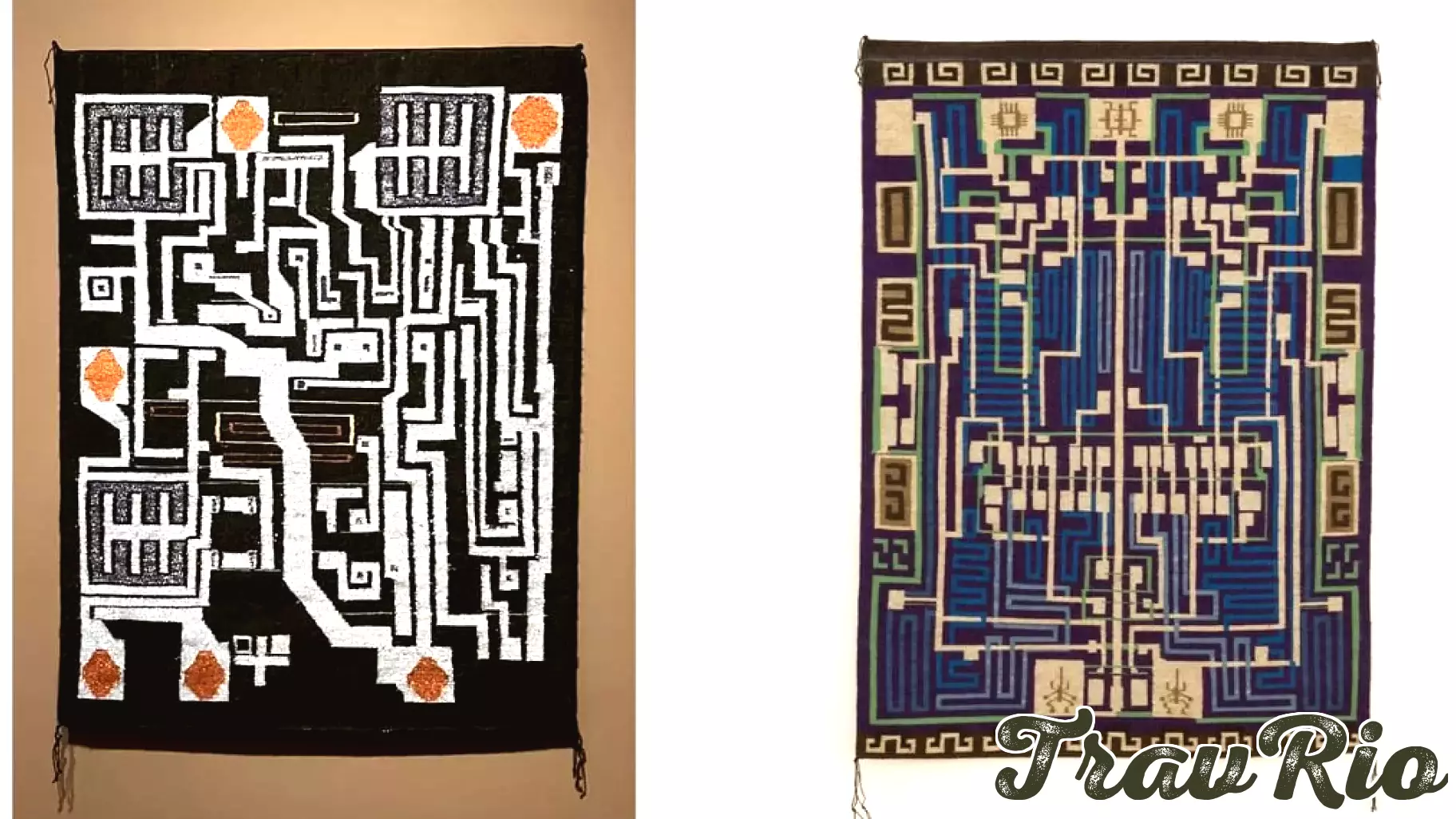
Marilou Schultz has spent decades bridging two worlds that seem far apart: the ancient craft of Navajo weaving and the modern logic of computer architecture. Her work, which began in the 1980s, shows how a traditional art form can speak directly to the technology that shapes our daily lives.
Schultz, a Navajo weaver from the Salt River community, first gained attention for her handwoven rugs that replicated the patterns found on early computer microchips. One of her most famous pieces, a weaving of the Intel 8085 microprocessor, was created for a 1984 exhibition. The rug translates the chip's complex circuit layout into a geometric textile design, using natural wool dyes and traditional techniques. What looks like a simple abstract pattern to the untrained eye is actually a precise map of silicon pathways.
Her work is not just about copying technology into wool. Schultz sees a deep connection between the logic of weaving and the logic of computing. Both rely on a grid, a set of rules, and a repeating pattern of threads or signals. She has said that weaving is a form of binary code: each warp and weft thread is either over or under, just as a computer bit is either a one or a zero.
Beyond the microchip series, Schultz has continued to explore how digital tools can assist in designing and planning weavings without losing the handmade quality. She uses software to map out patterns before she begins, but the final piece is always woven by hand on a loom. This process allows her to experiment with complex designs that would be difficult to draft on paper alone.
Schultz' influence extends beyond the art world. Her work has been shown in museums and has been studied by engineers and computer scientists who see the weavings as a tangible, beautiful representation of abstract systems. By bringing together Navajo tradition and digital technology, she challenges the idea that these two worlds are separate. Instead, she shows that weaving can be a form of thinking, and that a loom can be a kind of computer.
MORE NEWS
August 12, 2026 - 04:03
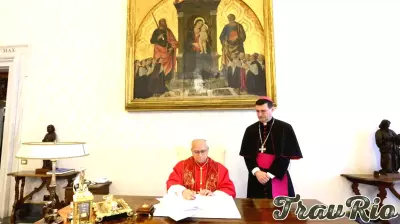
Pope’s 2027 Peace Day message to focus on ‘disarming technology’The Vatican has announced the theme for the 2027 World Day of Peace, and it is a direct challenge to the way the world builds and uses its tools. Pope Francis has chosen the focus `Disarming...

August 11, 2026 - 12:09
Morgan Stanley Launches U.S. Innovation Initiative Supporting Quantum and Strategic TechnologiesMorgan Stanley has unveiled a new U.S. Innovation Infrastructure Initiative, a strategic effort aimed at backing companies working on quantum computing, artificial intelligence, and other advanced...
August 10, 2026 - 20:38
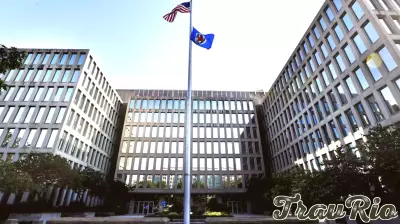
Modernizing government technology is starting to pay offThe fund was created to help agencies replace outdated systems that are expensive to maintain and vulnerable to attack. For a long time, critics said it moved too cautiously and approved too few...
August 10, 2026 - 13:53
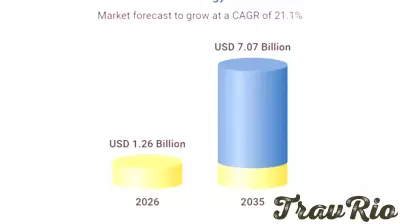
Li-Fi Technology Market - Analysis and Forecast, 2026-2035 Now Available — Forecasts Growth from $1.26B to $7.07B, Profiles Signify, ams OSRAM, pureLiFi, and 12 Other Key PlayersA new industry report now available outlines a significant growth trajectory for the Li-Fi technology market, with projections showing an expansion from $1.26 billion in 2026 to $7.07 billion by...