Exploring the Latest Graphics Card Technologies: What You Need to Know
23 December 2025
Buckle up, tech lovers — it’s time to talk about the powerhouse that fuels our gaming sessions, creative workstations, and even some pretty insane AI computations. Yep, we’re diving deep into the world of graphics cards. Whether you’re a gamer, a content creator, or just someone fascinated by cutting-edge tech, knowing what’s going on with the latest graphics card technologies is a must.
Technology doesn’t wait. And when it comes to GPUs (graphics processing units), it’s evolving at breakneck speed. So, what’s cooking in the world of silicon and VRAM lately? Let’s break it all down in a way that’s easy to understand and fun to read.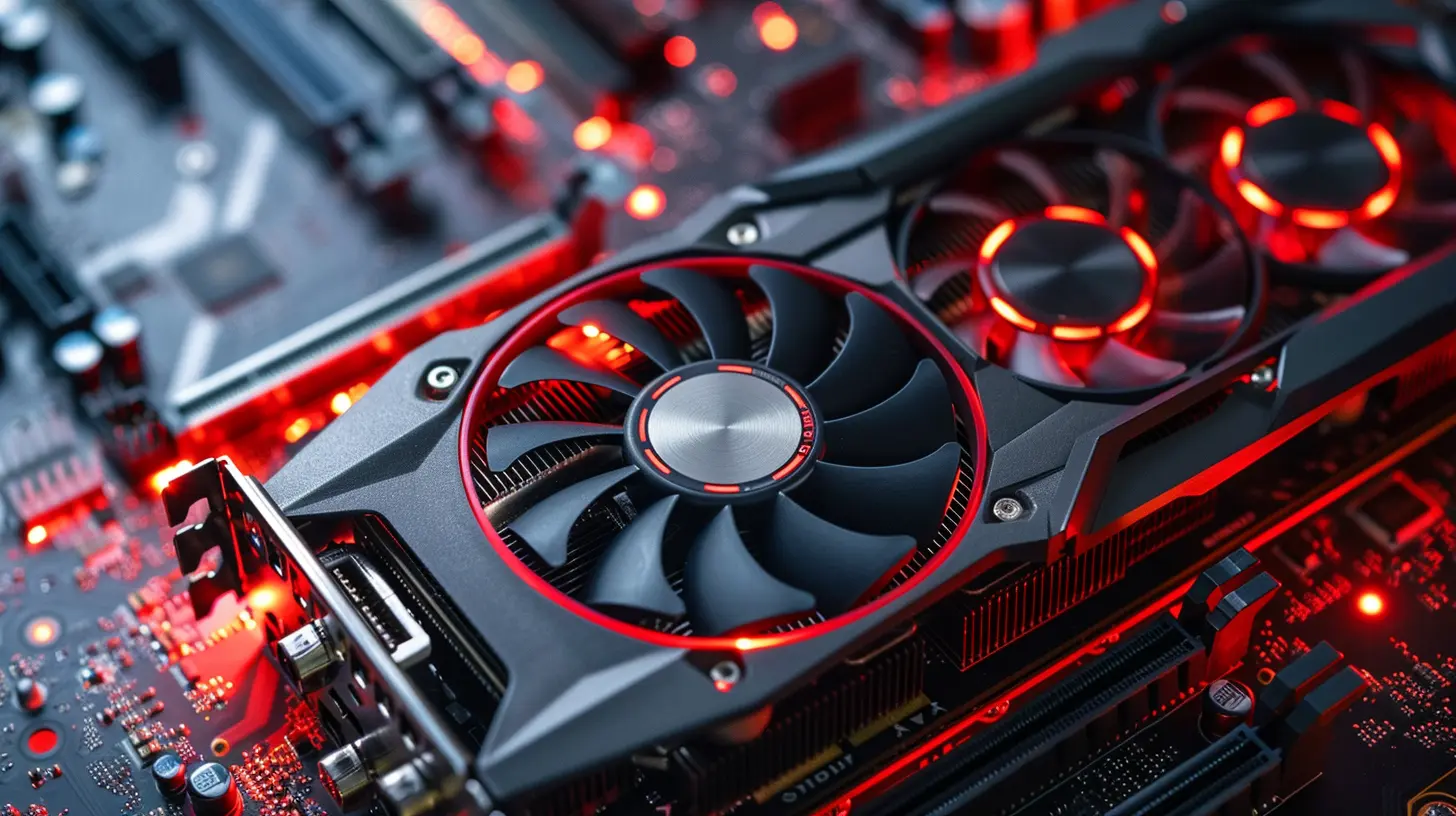
🧠 What Exactly Are Graphics Cards?
Let’s start with the basics. A graphics card, or GPU, is like your computer’s visual brain. It’s responsible for rendering images, videos, and animations. Without one, your games would lag, your favorite movies would stutter, and forget about any kind of 3D rendering or video editing.You could say your GPU is the artist of your PC — sketching out the digital world you see on-screen, stroke by pixelated stroke.
⚙️ The Evolution Train: GPUs Then vs Now
A decade ago, we were excited to get 60 FPS at 1080p. Now? The latest cards are pushing 4K, even 8K, with ray tracing turned on and shadows so realistic you’d swear they were alive.Here’s a quick breakdown of how far we’ve come:
- Old school GPUs: Focused on raw power for rendering.
- Modern GPUs: Packed with AI cores, ray tracing units, and supersampling tech that practically thinks for itself.
Modern-day cards don’t just draw graphics—they make intelligent decisions about how to render scenes more efficiently. It’s like going from a hammer to a smart drill that also tells you which wall to put the hole in.
🚀 Ray Tracing: Say Hello to Real-Time Cinema
Alright, let’s geek out a bit. Ray tracing is one of the most exciting developments in recent GPU tech. What is it?Imagine light in a video game acting like real light. Sunlight bounces off a puddle, reflects a neon sign, and then hits your character’s armor. The result? Mind-blowingly realistic visuals.
Both NVIDIA and AMD have been riding this wave:
- NVIDIA introduced RTX series with dedicated RT cores.
- AMD rolled in with their RDNA architecture to keep pace.
Real-time ray tracing doesn’t just make things prettier — it sets a new visual benchmark. Once you see it, you can’t unsee how good it looks.
🧮 DLSS, FSR & AI Upscaling: Magic Tricks for Your Eyes
If you’ve heard of DLSS (Deep Learning Super Sampling) or FSR (FidelityFX Super Resolution), you’re looking at AI-powered wizardry. These technologies let your GPU render games at lower resolutions and then scale them up — all while keeping visual fidelity insanely high.Why care? Two words: better performance.
- DLSS (NVIDIA): Uses machine learning to upscale pixels. It's like watching a movie in low res and having it magically switch to HD mid-scene.
- FSR (AMD): Doesn’t rely on AI but still boosts frame rates by upscaling smartly.
These tools let you game at higher frame rates without sacrificing visuals. Think of it as ordering fast food and having it taste like gourmet cuisine.
🧊 Cooling Systems: Keeping the Heat in Check
Power-packed GPUs get hot. Like really hot.Enter the latest in cooling tech. Today’s high-end cards come with:
- Triple-fan designs
- Vapor chambers
- Liquid cooling options
- Intelligent fan curves and zero-RPM modes
Why does this matter? Because heat = performance throttling. The cooler your GPU, the better it performs. It's like keeping a race car engine chilled before the next lap — critical for peak performance.
🎮 GPU for Gamers: Frame Rates, 4K, and Future-Proofing
Let’s be real — if you're a gamer, you want all the frames and none of the lag.Today’s top GPUs can handle:
- 4K resolution at 60-120 FPS
- 1440p just shy of 200 FPS
- Ray tracing ON without your FPS tanking
Cards like the NVIDIA RTX 4090 or AMD RX 7900 XTX are basically mini-supercomputers dedicated entirely to your gaming pleasure.
And with more games optimized for ray tracing and AI features, buying a newer GPU isn’t just about now — it’s about staying future-ready.
🎨 GPUs for Creators: Video Editing, 3D Work, and AI Workloads
Gamers aren’t the only ones cheering.Content creators love what these new GPUs bring to the table. Why?
- Real-time video editing previews
- Lightning-fast rendering in apps like Blender and Premiere Pro
- AI-assisted tools (hello, Adobe Firefly!)
If your job (or passion) involves pixels, textures, or timelines, modern GPUs can cut your workflow time in half. No exaggeration.
🤖 GPUs and AI: A Match Made in Silicon Heaven
We’re officially in the age of AI — and GPUs are its backbone. Whether it's machine learning models, generative AI, or neural networks, graphics cards are being used way beyond gaming.Why are they so good at AI? Because those thousands of cores can crunch massive amounts of data at lightning speed.
Popular frameworks like TensorFlow and PyTorch are optimized for GPU usage. In fact, NVIDIA even branched into the AI-chip market with their A100 and H100 cards, specifically targeting data centers and AI developers.
🔋 Power Consumption: Do Performance and Efficiency Mix?
Now, let’s talk numbers — specifically watts.High-end graphics cards are beasts, and with great power comes… huge electric bills. But manufacturers are working on that too.
NVIDIA’s Ada Lovelace architecture and AMD’s RDNA 3 are both a big step forward in power efficiency. Thanks to smaller transistors and smarter power management, we’re seeing better performance-per-watt numbers.
Yes, you’ll still need a beefy power supply for top-tier cards, but things are getting leaner and greener. Well, relatively speaking.
🧩 PCIe Gen 4 vs Gen 5: Does the Interface Matter?
Here’s one for the semi-nerdy crowd: does your GPU need PCIe Gen 5 support?Short answer: Not really… yet.
Most current-generation GPUs still don’t max out the bandwidth of PCIe Gen 4. But with Gen 5-compatible motherboards and CPUs becoming the norm, it’s good to be prepped.
Think of it like getting a bigger highway for more traffic — might not matter today, but tomorrow when traffic increases? Smooth sailing.
💸 The Price Tag Problem: What’s Up with GPU Costs?
We can’t ignore it — GPUs are expensive.Between chip shortages, scalpers, and insane demand, prices shot up. Although things are slowly normalizing, the top-tier cards still cost as much as a decent laptop.
But there’s a silver lining:
- Mid-range GPUs are getting seriously good.
- Cards like the RTX 4070 or RX 7800 XT can handle 1440p like champs.
- Plus, used GPUs are flooding the market as miners offload.
If you're smart about it, now’s actually a great time to upgrade or build your dream rig.
🧠 Choosing the Right GPU: Tips for Making the Smart Move
Feeling overwhelmed? Don’t worry — here’s a cheat sheet to help you choose:1. Know Your Use Case: Gaming? Video editing? AI models?
2. Set a Realistic Budget: Factor in your PSU, cooling, and monitor.
3. Check Compatibility: Will it fit your case? Is your PSU strong enough?
4. Future-Proofing: Go for newer architectures with ray tracing and DLSS/FSR support.
5. Don’t Overspend for Bragging Rights: Get what you need, not just what’s trendy.
Remember, the latest isn’t always the greatest for your needs.
🕹️ Bonus: Upcoming Game-Changers to Watch
Here’s what’s cooking on the horizon:- NVIDIA’s RTX 5000 series: Rumored to be even more power-efficient with next-gen AI cores.
- AMD’s RDNA 4: Expected to leapfrog in performance while staying affordable.
- Intel Arc: Still young but promising… competition is very good for consumers.
Stay tuned, because the GPU race is far from over.
Final Thoughts: The Heartbeat of Modern Computing
Graphics card technology isn’t just about pushing pixels anymore. It’s about enabling immersive experiences, accelerating workflows, and even powering the AI tools of the future.From jaw-dropping visuals to AI-based performance boosts, today’s GPUs are smarter, faster, and cooler (literally) than ever before.
Whether you're upgrading your rig, building from scratch, or just staying informed — there’s never been a more exciting time to be a GPU nerd. So plug in, power up, and get ready to experience what modern graphics technology can truly do.
all images in this post were generated using AI tools
Category:
Graphics CardsAuthor:

Pierre McCord
Discussion
rate this article
2 comments
Gianna Palmer
This article offers a concise overview of the latest advancements in graphics card technology. It highlights key features like ray tracing, DLSS, and improved VR performance. A must-read for gamers and creators looking to upgrade their systems and stay ahead in the rapidly evolving tech landscape. Great insights!
January 6, 2026 at 4:23 PM
Pierre McCord
Thank you for the positive feedback! I'm glad you found the article helpful and insightful for gamers and creators.
Seraphine Patterson
Great article! It's exciting to see how graphics card technologies are evolving. Your insights on performance and features are incredibly helpful for both gamers and creators alike. Keep up the fantastic work, and I look forward to reading more!
December 23, 2025 at 3:47 AM
Pierre McCord
Thank you so much for your kind words! I'm glad you found the article helpful. Stay tuned for more updates on graphics card technologies!